


News

Abstract Seascape Wall Art for Calm Modern Living Rooms
Abstract seascape wall art for living room spaces brings the calm of water and horizon into modern interiors without relying on literal coastal imagery. This guide explains how blue-gray, taupe, cream, and misty neutral palettes affect the mood of a room, how texture and lighting add depth, and how wall color, textiles, scale, and placement help seascape artwork feel calm, modern, and integrated rather than overly coastal.
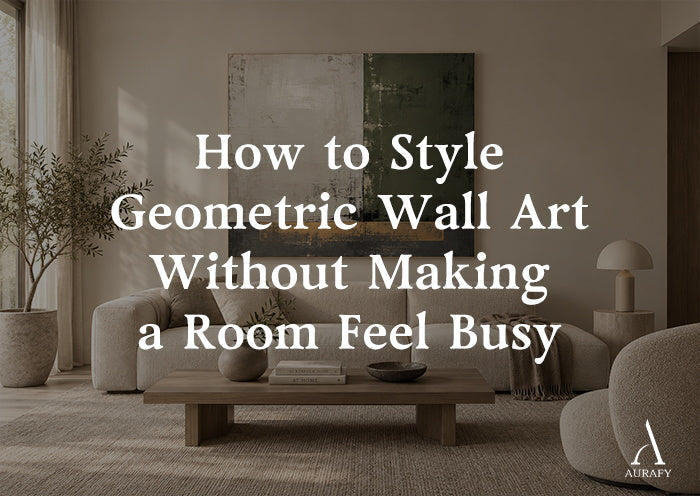
How to Style Geometric Wall Art Without Visual Clutter
How to style geometric wall art without visual clutter starts with matching pattern intensity to the room, keeping furniture lines simple, and leaving enough negative space around the piece. This guide explains how to balance grids, blocks, and textured geometry with clean furniture, restrained color repetition, proper scale, and soft neutral wall colors so geometric art feels structured rather than busy.
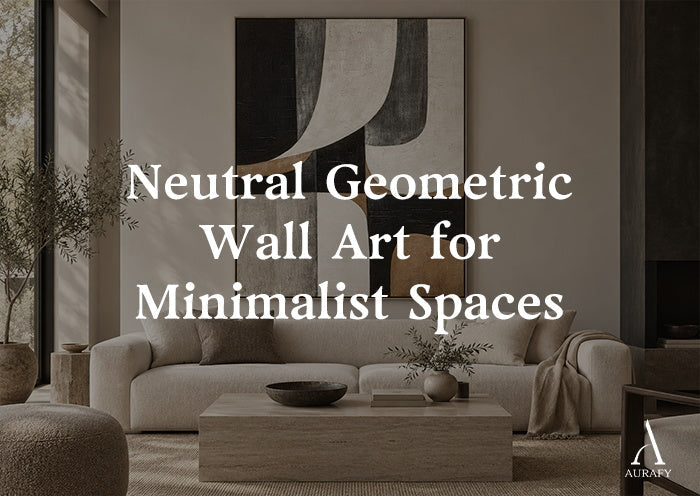
Neutral Geometric Wall Art for Minimalist Spaces
Neutral geometric wall art brings structure to minimalist spaces without the harshness of high-contrast black-and-white designs. This guide explains how beige, ivory, cream, charcoal, and warm earth tones change the way geometric compositions feel, how grid, block, and relief formats suit different rooms, and how furniture lines, wall color, texture, negative space, scale, and placement affect the final look.
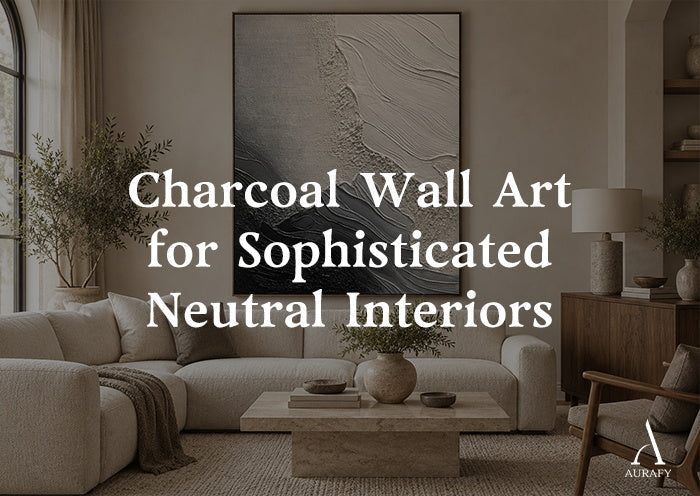
Charcoal Wall Art for Sophisticated Neutral Interiors
Charcoal wall art adds depth and structure to sophisticated neutral interiors without the harshness of true black. This guide explains how warm, cool, and neutral charcoal undertones interact with ivory, cream, taupe, wood, stone, and textiles, while showing how texture, lighting, scale, and placement help charcoal artwork feel rich, balanced, and intentional rather than flat or overly dark.
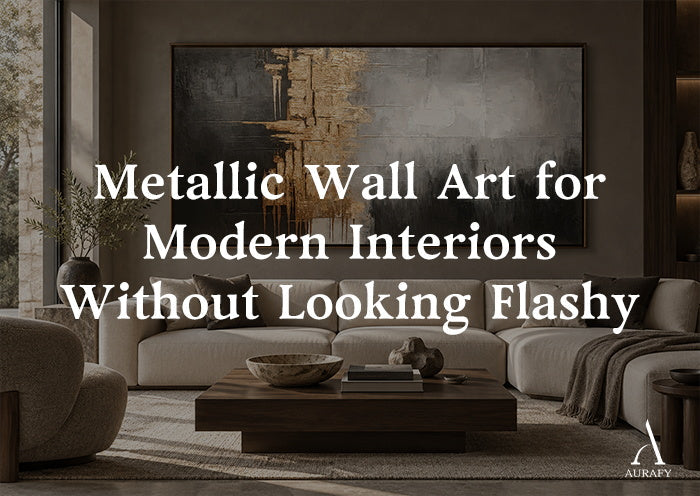
Metallic Wall Art for Modern Interiors Without Looking Flashy
Metallic wall art for modern interiors looks most refined when the metal tone, finish, lighting, backdrop, and scale are balanced together. This guide explains how gold, bronze, and silver create different moods, how matte, brushed, and reflective finishes respond to daylight and evening light, and how charcoal, ivory, stone, wood, textiles, and proper placement help metallic artwork feel architectural rather than flashy.

How to Use Green Wall Art in a Japandi Interior
Green wall art for Japandi interiors works best when the color is muted, the texture feels natural, and the piece supports the room’s hierarchy rather than competing with it. This guide explains how to choose sage, moss, olive, and forest green artwork by comparing saturation, undertone, texture, secondary colors, scale, negative space, and whether the piece should blend quietly into the room or act as a deliberate focal point.
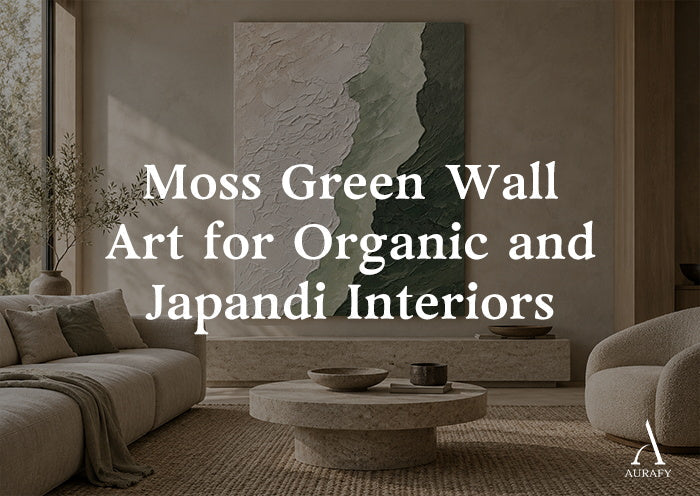
Moss Green Wall Art for Organic and Japandi Interiors
Moss green wall art works especially well in organic and Japandi interiors because its muted gray-brown undertones behave more like a natural material than a bright accent color. This guide explains how moss green differs from olive, forest, and emerald, how to pair it with oak, linen, stone, plaster, and warm neutrals, and how undertone, contrast, texture, lighting, scale, and visual direction affect the final look.
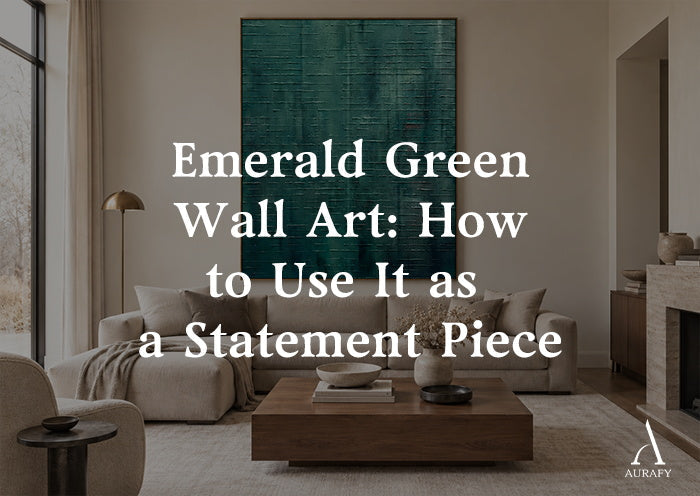
Emerald Green Wall Art: How to Use It as a Statement Piece
Emerald green wall art works best as a single statement piece that anchors the room without overwhelming it. Choose the focal wall first, then balance the artwork with neutral furniture, warm wood or metal accents, appropriate lighting, and a scale that fits the sofa, bed, hallway, or open wall. Wall color, room size, and light levels also affect how deep emerald tones read in the space.
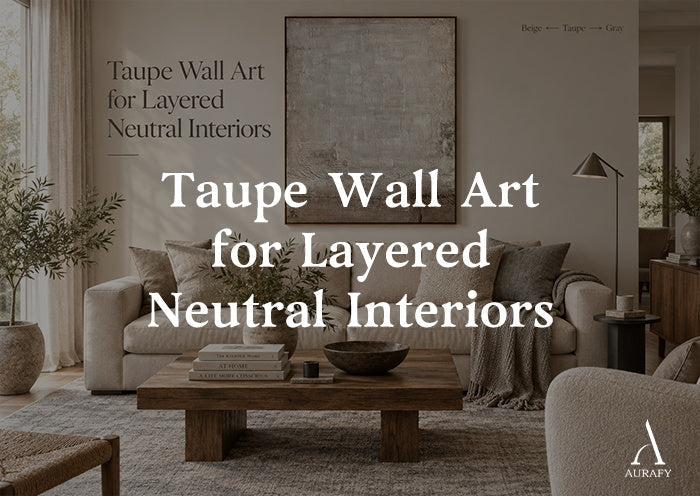
Taupe Wall Art for Layered Neutral Interiors
Taupe wall art for neutral interiors creates depth by bridging beige, gray, cream, and brown without overpowering the room. This guide explains how to choose warm or cool taupe based on flooring, wall color, hardware, lighting, texture, scale, and placement, with practical advice for living rooms, bedrooms, entryways, and mixed-neutral spaces.