


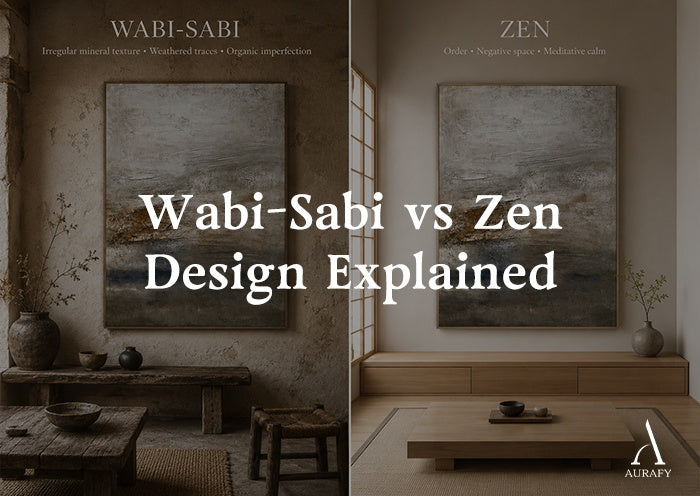
Wabi-Sabi vs Zen Design Explained

Are Wabi-Sabi and Zen the Same?

Wabi-sabi and Zen are related but different concepts. When comparing wabi sabi vs zen, the distinction comes from how each concept approaches simplicity, awareness, material character, and imperfection.
Both can inspire calm, uncluttered spaces, but they focus on different ideas.
Zen is connected with a tradition of meditation, discipline, awareness, and simplicity.
Wabi-sabi is a Japanese aesthetic sensibility that appreciates:
· impermanence
· natural variation
· simplicity
· the beauty of imperfect materials
A Zen-inspired room often creates calm through order and restraint. This sense of order often shapes calming interiors that use space, proportion, and visual restraint to reduce distraction.
A wabi-sabi-inspired room creates calm through acceptance of natural irregularity.
Understanding the Origins and Meaning

What Is Zen?
Zen is a school of Buddhism associated with meditation and direct awareness.
In design discussions, Zen-inspired interiors often emphasize: These principles also influence minimalist Japanese design where clarity and intentional arrangement are central to the visual experience.
· simplicity
· empty space
· reduced distractions
· intentional arrangement
The goal is usually a sense of clarity and quiet.
What Is Wabi-Sabi?
Wabi-sabi comes from two related Japanese concepts.
Wabi
Wabi originally carried associations with solitude and simplicity.
Over time, it developed into an appreciation for:
· modest living
· quiet beauty
· freedom from unnecessary excess
Sabi
Sabi refers to the beauty associated with age and change.
Examples include:
· aged wood
· weathered metal
· naturally changing surfaces
It recognizes that time can add character rather than only create deterioration.
How Zen and Wabi-Sabi Shape Interior Design Differently
|
Design Aspect |
Zen-Inspired Spaces |
Wabi-Sabi Spaces |
|
Main focus |
Clarity, discipline, simplicity |
Imperfection, change, natural variation |
|
Layout |
Ordered and intentional |
Organic and less rigid |
|
Surfaces |
Clean and controlled |
Textured and naturally varied |
|
Materials |
Refined natural materials |
Raw or visibly aged materials |
|
Artwork |
Balanced compositions, minimal gestures |
Handmade textures, organic forms |
|
Visual feeling |
Quiet and structured |
Grounded and imperfect |
Choosing Wall Art: Zen vs Wabi-Sabi

Art for Zen-Inspired Interiors
Zen-inspired spaces often suit artwork with:
· simple compositions
· controlled lines
· strong negative space
· restrained color
Examples may include: In this context, Japanese decor often favors artwork that supports a quiet, intentional room rather than dominating it.
· minimalist ink-style artwork
· simple geometric forms
· calm monochrome compositions
The focus is visual balance. For this reason, zen wall art often relies on negative space, restrained color, and simple composition rather than strong surface variation.
Art for Wabi-Sabi Interiors
Wabi-sabi artwork often emphasizes:
· handmade surfaces
· organic texture
· material authenticity
· natural variation
Examples may include:
· textured mineral artwork
· handmade plaster surfaces
· earth-toned abstract pieces
The surface itself becomes part of the expression.
Can Zen and Wabi-Sabi Be Combined?
Yes.
Many interiors combine Zen-inspired organization with wabi-sabi materials. Thinking about zen vs wabi sabi interior is therefore less about choosing one style exclusively and more about deciding how much order, texture, and natural variation the room should express.
A practical approach:
Use Zen principles for the room structure.
Use wabi-sabi elements for texture and character.
For example:
· a clean minimalist room with one handmade textured artwork
· a simple layout with natural stone and aged wood accents
· a restrained palette with organic surface variation
The combination works because order and imperfection can complement each other.
Avoiding Common Misunderstandings

Wabi-Sabi Does Not Mean “Messy”
Wabi-sabi is not about neglect or random disorder. This distinction also helps answer is wabi sabi the same as zen: they can overlap in restraint, but they are not the same philosophy or design approach.
It values intentional simplicity and appreciation of natural materials.
Zen Does Not Mean “Empty Rooms”
A Zen-inspired space does not require removing everything.
The focus is usually on:
· purpose
· awareness
· reducing unnecessary distraction
Wabi-Sabi Is Not Just Rustic Decoration
Earth tones and rough textures may appear in wabi-sabi interiors, but the concept is broader than a visual style.
It is about the relationship between people, objects, materials, and time.
Frequently Asked Questions
Is wabi-sabi part of Zen Buddhism?
Wabi-sabi has historical connections with Japanese Buddhist ideas, including awareness of impermanence, but it is an aesthetic sensibility rather than a branch of Zen practice.
Can a Zen home include textured artwork?
Yes. A Zen-inspired interior can include textured artwork if the piece supports the room’s sense of simplicity and balance.
What makes artwork feel wabi-sabi?
Artwork often feels wabi-sabi when it shows material authenticity, handmade qualities, natural variation, and acceptance of imperfection.
Is Zen design the same as Japanese minimalism?
Not exactly. Zen may influence minimalist Japanese interiors, but Japanese design includes many traditions beyond Zen philosophy.
Should I choose Zen or wabi-sabi artwork?
Choose based on the atmosphere you want:
Zen-inspired art suits structured, quiet spaces. Homeowners looking for Japanese calming wall art can use this distinction to choose between controlled compositions and more tactile, naturally varied artwork.
Wabi-sabi art suits spaces that celebrate texture and natural variation.
Explore Wabi-Sabi Inspired Artwork
Understanding the difference between Zen design and wabi-sabi art helps you choose artwork that matches your home’s intention.
Explore textured artwork collections or share your interior style to find a piece that complements your space.
Share:
Wabi-Sabi vs Organic Modern Design
Cali Wabi-Sabi Interior Design Guide