


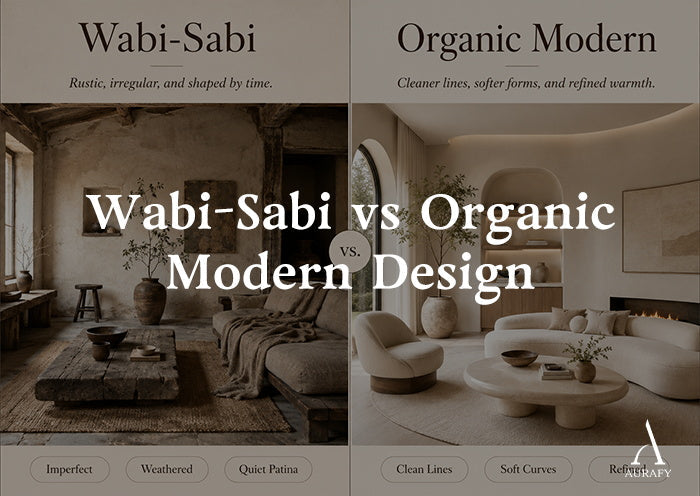
Wabi-Sabi vs Organic Modern Design

How Are Wabi-Sabi and Organic Modern Different?

Wabi-sabi and Organic Modern design share a love of natural materials, neutral tones, and calm interiors, but they approach beauty in different ways. When comparing wabi sabi vs organic modern, the key difference is not only appearance but the philosophy behind how each style approaches materials, texture, and comfort.
Wabi-sabi focuses on:
· imperfection
· natural aging
· irregular textures
· visible craftsmanship
Organic Modern focuses on: These ideas are often reflected through organic modern wall art that combines refined texture with contemporary spaces.
· contemporary comfort
· refined natural materials
· soft architectural forms
· balanced simplicity
A wabi-sabi interior may celebrate the uneven surface of handmade clay or weathered wood. An Organic Modern interior may prefer smooth travertine, curved furniture, and carefully edited natural textures.
They can work together, but they create different visual experiences. Both styles are often used in natural interior design because they value materials, warmth, and connection with nature.
Wabi-Sabi vs Organic Modern at a Glance
|
Design Element |
Wabi-Sabi |
Organic Modern |
|
Core idea |
Beauty found in imperfection, simplicity, and natural change |
Contemporary comfort combined with natural materials |
|
Design character |
Raw, organic, imperfect |
Refined, warm, and polished |
|
Shapes |
Asymmetrical, irregular, handmade |
Soft curves, clean lines, balanced forms |
|
Materials |
Aged wood, clay, raw stone, handmade ceramics |
Light oak, travertine, linen, polished stone |
|
Surface finish |
Visible texture and natural variation |
Smooth, controlled, tactile finishes |
|
Color direction |
Earth, charcoal, clay, muted mineral tones |
Warm neutrals, beige, cream, soft natural colors |
|
Artwork style |
Organic texture, handmade surfaces, imperfect forms |
Controlled texture, balanced compositions, refined simplicity |
The Main Difference: Imperfection vs Refinement

The biggest difference between these styles is how they treat irregularity.
Wabi-Sabi Embraces Material Variation
Wabi-sabi values the evidence of time and making.
A wabi-sabi-inspired artwork may include:
· uneven edges
· visible hand application
· natural surface variation
· asymmetrical composition
The irregularity is part of the artwork’s character.
Organic Modern Controls Texture
Organic Modern interiors also value natural materials, but they usually present them in a more edited way.
Common characteristics include:
· smooth stone surfaces
· curved furniture
· balanced layouts
· carefully coordinated colors
Texture is welcome, but it usually supports a cleaner overall structure.
Where Wabi-Sabi and Organic Modern Overlap

The two styles often share: Their shared elements are often found in earthy minimalist decor through natural materials, soft tones, and restrained compositions.
· linen and wool textiles
· natural wood
· stone materials
· matte finishes
· neutral palettes
This overlap is why they are sometimes confused.
The difference appears in the level of refinement. This distinction explains the difference between wabi sabi and organic modern when choosing furniture, artwork, and decorative elements.
A lightly textured stone surface may feel Organic Modern.
A rough handmade plaster surface with visible variation may lean more strongly toward wabi-sabi.
Choosing Artwork for Each Interior Style
Artwork for Organic Modern Homes Selecting textured art with balanced composition can help maintain the refined feeling of an Organic Modern interior.
Organic Modern spaces often work well with artwork that has:
· softer texture
· balanced composition
· neutral colors
· controlled visual movement
Good matches may include:
· subtle mineral textures
· gentle abstract forms
· refined natural tones
The artwork should complement the room’s calm structure rather than overpower it.
Artwork for Wabi-Sabi Homes
Wabi-sabi interiors often suit artwork with:
· stronger material presence
· visible handmade qualities
· organic shapes
· natural pigment variation
Suitable directions may include:
· textured plaster artwork
· raw mineral surfaces
· earth-toned abstract compositions
The artwork becomes part of the room’s material story. For homeowners looking for wall art for organic modern home spaces, artwork should connect with the room's materials, colors, and atmosphere.
Can You Mix Wabi-Sabi Art With Organic Modern Design?
Yes.
Many contemporary homes combine the two approaches.
A practical way to mix them is:
Keep the overall architecture clean and modern.
Introduce one or two handmade, organic elements.
Avoid adding too many competing textures.
For example:
· curved cream furniture + one textured mineral artwork
· smooth stone surfaces + handmade ceramic objects
· modern lighting + naturally varied artwork
The balance comes from contrast.
A completely polished room may benefit from more organic texture. A heavily rustic room may need more structure.
Wabi-Sabi, Organic Modern, and Japandi: Quick Clarification
These terms are often used together online, but they are not identical. This is why searches for organic modern vs japandi often require understanding the different origins and design principles behind each approach.
Wabi-sabi is a Japanese aesthetic sensibility focused on impermanence, simplicity, and appreciation of natural variation.
Organic Modern is a contemporary interior design category combining modern forms with natural materials.
Japandi is a modern design approach combining Japanese and Scandinavian influences.
They may overlap visually, but they come from different design ideas.
Frequently Asked Questions
Is Organic Modern the same as Wabi-Sabi?
No. They share natural materials and neutral palettes, but Organic Modern focuses on refined contemporary comfort, while wabi-sabi emphasizes imperfection, simplicity, and natural aging.
Can wabi-sabi art work in an Organic Modern home?
Yes. A carefully selected textured artwork can add handmade character to an Organic Modern space. The key is choosing a level of texture that fits the room’s overall refinement.
What artwork suits an Organic Modern interior?
Artwork with balanced composition, neutral tones, and controlled texture usually fits well with Organic Modern interiors.
What artwork suits a Wabi-Sabi interior?
Artwork with visible craftsmanship, organic texture, and natural material variation often aligns better with wabi-sabi principles.
Is Organic Modern a Japanese style?
No. Organic Modern is a contemporary interior design category rather than a traditional Japanese style.
Find Artwork That Matches Your Interior

Choosing between wabi-sabi art and Organic Modern art starts with understanding your room’s materials, shapes, and atmosphere.
Explore textured artwork collections or share your interior photos to find a piece that fits your space.
Share:
Is Wabi-Sabi an Art Style?
Wabi-Sabi vs Zen Design Explained