


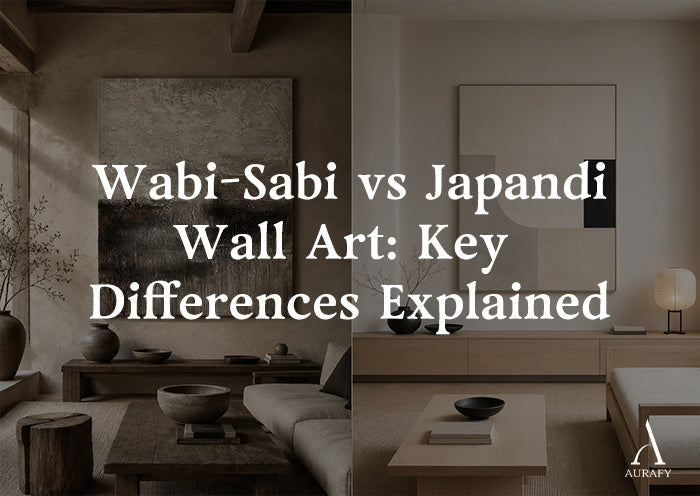
Wabi-Sabi vs. Japandi Wall Art: Key Differences Explained

Wabi-Sabi and Japandi Are Similar, but Not the Same
Wabi-Sabi and Japandi often appear together in modern interiors because both value simplicity, natural materials, and calm spaces. However, they represent different ideas.
Wabi-Sabi is a Japanese aesthetic sensibility focused on imperfection, impermanence, material honesty, and the beauty of change over time.
Japandi is a contemporary interior design approach that combines Japanese restraint with Scandinavian functionality, warmth, and clean structure.
In simple terms:
· Wabi-Sabi asks: How can we appreciate natural variation and the marks of time?
· Japandi asks: How can we create a calm, functional, and balanced living environment?
Understanding this difference makes it easier to choose wall art that genuinely belongs in your space rather than simply matching a trend.
Wabi-Sabi and Japandi Wall Art at a Glance
|
|
Wabi-Sabi Wall Art |
Japandi Wall Art |
|
Core idea |
Imperfection, impermanence, natural variation |
Balance, simplicity, function, visual harmony |
|
Design approach |
Organic, tactile, material-focused |
Structured, refined, minimal |
|
Surface |
Visible texture, handmade marks, irregular edges |
Smooth or controlled texture, clean finish |
|
Composition |
Asymmetrical, open, intentionally imperfect |
Balanced, edited, carefully arranged |
|
Colors |
Earth tones, clay, charcoal, weathered neutrals |
Soft beige, warm wood tones, grey, muted black |
|
Materials |
Mineral textures, plaster, clay, aged wood |
Oak, linen, matte ceramics, refined natural materials |
|
Atmosphere |
Grounded, quiet, contemplative |
Calm, warm, organized |
What Is the Core Difference Between Wabi-Sabi and Japandi?

The easiest way to understand the difference is:
Wabi-Sabi emphasizes texture and the evidence of making. Japandi emphasizes structure and visual balance.
A Wabi-Sabi-inspired artwork often reveals the hand of the maker. Uneven edges, mineral variations, natural cracks, and visible tool marks are not imperfections to hide. They become part of the artwork's meaning.
For example, a textured wabi sabi wall art piece created with mineral paste may show changes in surface depth, pigment variation, and handmade movement. The viewer notices not only the image, but also how the material was formed.
Japandi art takes a more controlled approach. It still values natural materials, but the overall composition is usually cleaner and more intentional. Texture can exist, but it tends to support the room rather than become the main visual event.
A useful comparison:
· Wabi-Sabi celebrates the mark left by the process.
· Japandi celebrates the clarity of the final composition.
Color Differences: Weathered vs. Coordinated

Wabi-Sabi Color Language
Wabi-Sabi wall art often uses colors that feel connected to natural materials:
· warm white
· clay
· stone
· charcoal
· faded brown
· muted green
· weathered grey
These colors often resemble surfaces shaped by nature, such as aged wood, earth, stone, or mineral deposits.
Variation is important. A single artwork may contain subtle shifts in tone rather than a perfectly uniform surface.
Japandi Color Language
Japandi art usually works with a more coordinated palette:
· soft neutrals
· light oak tones
· beige
· warm grey
· muted black accents
The goal is not visual excitement but harmony. A Japandi interior often feels calm because every element appears intentionally selected and connected.
Composition Differences: Imperfect Balance vs. Controlled Harmony

Wabi-Sabi Composition
Wabi-Sabi art often uses:
· asymmetry
· irregular forms
· generous negative space
· unfinished-looking edges
The artwork does not need to feel perfectly resolved. Instead, it invites slower observation. The viewer discovers small variations over time.
Japandi Composition
Japandi art usually favors:
· clear structure
· balanced placement
· simple geometry
· controlled proportions
The artwork supports the architecture around it rather than challenging the space.
Choosing Between Wabi-Sabi Art and Japandi Art

The right choice depends less on the name of the style and more on the materials already present in your room.
Choose Wabi-Sabi Wall Art If Your Space Has:
· plaster walls
· natural stone
· aged wood
· linen fabrics
· handmade ceramics
· organic textures
A tactile wabi sabi art piece works well because it continues the same material language.
Choose Japandi Wall Art If Your Space Has:
· Scandinavian furniture
· light oak
· clean architectural lines
· minimal decoration
· carefully balanced neutral colors
A refined Japandi wall art piece helps maintain the room's visual order.
Three Room Examples

1. Scandinavian Living Room
Light oak furniture, linen upholstery, and clean architectural lines usually align better with Japandi art.
Choose:
· restrained abstraction
· soft neutral colors
· balanced compositions
· simple framing
Avoid overly dramatic textures that compete with the room's calm structure.
2. Wabi-Sabi Retreat
A room with clay plaster walls, stone surfaces, aged wood, and natural fibers creates the ideal environment for Wabi-Sabi-inspired artwork.
Choose:
· mineral textures
· visible handmade variation
· earthy colors
· organic compositions
The artwork should feel as though it belongs to the same material world as the room.
3. Modern Home Combining Both Styles
Many contemporary homes combine Japandi structure with Wabi-Sabi texture. In these spaces, use one dominant direction.
For example:
· Let Japandi define the furniture and layout.
· Introduce Wabi-Sabi through one textured focal artwork.
This creates contrast without making the room visually chaotic.
Can Wabi-Sabi and Japandi Be Mixed?

Yes. They are not opposites. In fact, many modern interiors borrow qualities from both.
A successful combination usually follows this rule:
Use Japandi for structure and Wabi-Sabi for material depth.
For example, a clean-lined Scandinavian sofa can work beautifully with a handmade mineral painting because the structured furniture creates balance while the textured artwork introduces warmth and individuality.
How to Choose Wabi-Sabi vs. Japandi Wall Art
Before buying artwork, consider these questions:
Does Your Room Feel Structured or Organic?
· Structured: Japandi may fit better.
· Organic: Wabi-Sabi may feel more natural.
Do You Prefer Perfect Balance or Visible Variation?
· Balance and order: Japandi.
· Imperfection and material character: Wabi-Sabi.
Do You Want Artwork to Blend In or Become a Tactile Focal Point?
· Blend with architecture: Japandi.
· Add texture and depth: Wabi-Sabi.
Getting the Cultural Meaning Right

Wabi-Sabi and Japandi are often used interchangeably online, but they should not be treated as identical.
Wabi-Sabi is not simply beige decoration, rough plaster, or imperfect-looking objects. It is a broader aesthetic sensibility connected to impermanence, simplicity, and appreciation of natural change.
Japandi is not an ancient Japanese philosophy. It is a modern design approach that combines Japanese and Scandinavian influences.
Both can create calm interiors, but they achieve that calm in different ways.
Frequently Asked Questions
Is Japandi the Same as Wabi-Sabi?
No. Wabi-Sabi is a Japanese aesthetic sensibility centered on imperfection, impermanence, and material variation. Japandi is a modern interior design style combining Japanese restraint with Scandinavian function and warmth.
Can Wabi-Sabi and Japandi Wall Art Work in the Same Home?
Yes. Many contemporary homes combine both approaches. A common strategy is using Japandi for structure and Wabi-Sabi for texture and handmade character.
What Type of Wall Art Suits a Wabi-Sabi Interior?
Wabi-Sabi interiors often pair well with textured artwork made from natural-looking materials, subtle earth tones, visible craftsmanship, and organic compositions.
What Type of Wall Art Suits a Japandi Interior?
Japandi spaces usually work well with minimalist abstract art featuring balanced compositions, soft neutral colors, and controlled textures.
Is Textured Wall Art Always Wabi-Sabi?
No. Texture alone does not define Wabi-Sabi. The relationship between material, process, restraint, and intention matters more than surface roughness.
Finding the Right Piece for Your Space

Choosing between Wabi-Sabi and Japandi wall art is not only about following a design label. The better question is whether the artwork supports the materials, lighting, and atmosphere already present in your home.
A carefully selected piece should feel connected to the room rather than simply placed on an empty wall.
If you are deciding between wabi sabi wall art and Japandi-inspired artwork, share your room photos, wall dimensions, and existing materials. A curated recommendation can help determine the right scale, texture, and composition for your interior.
Share:
What Is Wabi-Sabi Wall Art? A Guide to Imperfect Beauty
Wabi-Sabi Living Room Art: How to Choose the Right Piece