


Wabi-Sabi Living Room Art: How to Choose the Right Piece

How to Choose Wabi-Sabi Art for Your Living Room

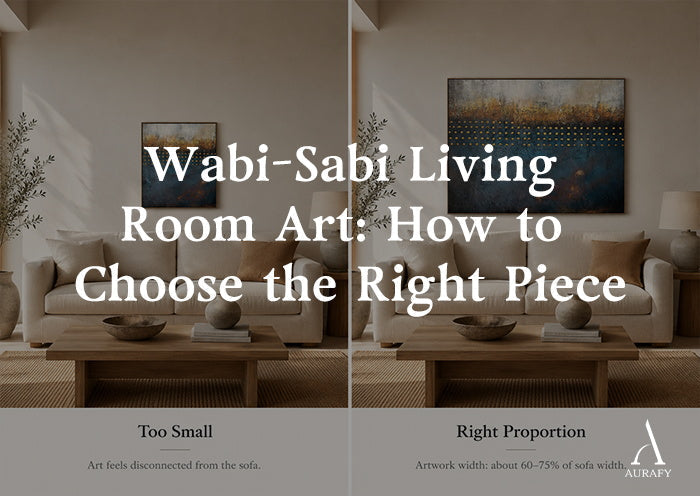
To choose wabi-sabi wall art for a living room, start by matching the artwork's scale, texture, and material character to the existing space. As a general design guideline, artwork above a sofa often works well when it spans around 60% to 75% of the sofa's width, with the lower edge positioned approximately 6 to 10 inches above the sofa back.
The goal is not to add decoration to an empty wall. A well-chosen wabi-sabi piece should feel like a natural extension of the room's architecture, similar to the way a stone surface, aged wood beam, or handmade ceramic object contributes to the overall atmosphere.
Wabi-sabi living room art works best when it introduces quiet texture, natural variation, and a sense of material honesty without overwhelming the space.
Matching Art to Wall Tones and Sofa Fabrics

Cream and Off-White Walls: Creating Soft Architectural Contrast
Cream and off-white walls create an ideal background for wabi-sabi artwork because they allow subtle textures and earthy tones to appear naturally.
A textured relief in raw clay, warm grey, muted charcoal, or soft mineral tones can create enough contrast to separate the artwork from the wall while maintaining a calm atmosphere.
The purpose is not dramatic visual impact. Instead, the artwork should feel integrated, as though it belongs to the same natural material palette as the rest of the room.
Microcement and Lime-Wash Surfaces: Layering Mineral Textures
Microcement and lime-wash walls already contain variation through tone and surface texture. Artwork placed on these backgrounds usually works best when it continues that material conversation rather than competing with it.
For example, a warm sand or terracotta textured piece against a cool grey microcement wall creates contrast while maintaining a shared mineral quality.
The relationship between the two surfaces becomes the focus: smooth versus rough, cool versus warm, finished versus naturally varied.
Upholstery Alignment: Linen, Bouclé, and Aniline Leather
The sofa beneath the artwork plays an important role in determining which textures and colors feel appropriate.
Linen and bouclé upholstery naturally complement wabi-sabi art because both materials contain visible irregularity and soft variation. Textured artwork with clay, ochre, or weathered grey tones can reinforce that tactile quality.
Aniline leather has a smoother appearance but still carries natural character. It often pairs well with more restrained monochromatic relief textures because the leather already provides warmth and richness.
In every case, the most successful combinations come from connecting the artwork to materials already present in the room rather than introducing an unrelated color or texture.
Practical Decision Matrix: If-Then Styling Rules

|
If Your Living Room Features |
Then Choose Artwork With |
Primary Spatial Goal |
|
An 84" off-white linen sofa |
54"–60" wide dual-panel or triptych artwork in charcoal, slate, or warm mineral tones |
Create a grounded visual anchor |
|
Cool grey microcement walls |
Warm terracotta, sand, or clay-based mineral textures |
Add warmth while maintaining material harmony |
|
Low ceilings under 8 feet |
Vertical artwork such as a 36" × 60" composition |
Draw the eye upward and improve perceived height |
|
Rich oak and leather accents |
Low-contrast ash, slate-grey, or monochromatic textured artwork |
Balance heavier materials with visual calm |
Sizing and Placement Guidelines for Living Rooms

A useful starting point is to select artwork that covers approximately 60% to 75% of the sofa width. For example, an 84-inch sofa often pairs well with artwork measuring roughly 50 to 63 inches across.
For hanging height, the bottom edge of the artwork is commonly placed about 6 to 10 inches above the sofa back. This creates enough connection between the furniture and artwork without making the wall feel crowded.
These measurements are design guidelines rather than fixed rules. Room proportions, ceiling height, sofa depth, and surrounding architectural features should always influence the final placement.
A narrow wall may require a taller composition. A large open-plan room may need a wider piece or multi-panel arrangement to maintain balance.
Three Living Room Examples

Case Study 1: The Modern Japandi Living Room
A soft linen sofa sits against a pale plaster wall with light wood furniture and minimal decoration.
A sandstone-toned textured artwork measuring approximately two-thirds of the sofa width adds depth without disturbing the room's quiet palette.
The warm mineral tone connects with the linen texture while maintaining enough difference to keep the artwork visually distinct.
Case Study 2: The Raw Industrial Loft
An industrial living room with exposed concrete walls and steel-framed windows requires artwork with enough physical presence to balance the surrounding materials.
A high-relief charcoal composition can provide contrast against concrete surfaces while maintaining a restrained, architectural feeling.
The matte surface prevents the artwork from appearing overly decorative and allows the texture itself to become the focal point.
Case Study 3: The Warm Organic Modern Space
A room featuring bouclé seating, warm wood flooring, and natural fabrics benefits from artwork that continues the existing tactile language.
A split-panel piece using earth tones, subtle texture changes, and organic movement can connect the warmth of the floor and furniture with the vertical wall surface.
Understanding Wabi-Sabi Beyond a Decoration Trend

Wabi-sabi should not be reduced to a beige color palette, rough textures, or a minimalist interior trend.
It is a broader Japanese aesthetic sensibility connected to imperfection, impermanence, and appreciation of natural change.
A wabi-sabi interior does not need to look empty or unfinished. Instead, it values objects that reveal their material qualities, including handmade variation, aging, and the visible process behind their creation.
This is why authentic wabi sabi art often focuses less on perfect symmetry and more on the relationship between material, process, and time.
Choosing the Right Wabi-Sabi Wall Art

When selecting artwork for your living room, consider four factors:
1. Texture
Look for surfaces that create visual depth and reward close viewing. Handmade texture, mineral variation, and natural irregularity often work well in wabi-sabi interiors.
2. Color
Choose colors connected to the room's existing materials:
clay tones with plaster walls
charcoal with stone or concrete
warm neutrals with linen and wood
muted earth tones with natural fibers
3. Scale
A single large piece often creates a stronger wabi-sabi statement than many small decorative artworks because it allows the material quality to remain the focus.
4. Placement
Wabi-sabi does not require perfect symmetry. Slight asymmetry and generous empty space can help the artwork feel more natural within the room.
Frequently Asked Questions
Should living room wabi-sabi art be framed or unframed?
Both approaches can work. An unframed or raw-edge presentation often emphasizes material honesty and handmade character, while a simple frame can help the artwork integrate into a more structured interior.
Can colorful rugs work with wabi-sabi wall art?
Yes. The key is balance. Muted, earthy, or naturally inspired rug colors usually complement wabi-sabi artwork better than highly saturated patterns that compete for attention.
Is one large artwork better than a gallery wall for a wabi-sabi living room?
Often, yes. A single large piece or a small coordinated multi-panel arrangement usually supports the wabi-sabi preference for simplicity and material focus better than many small framed pieces.
What makes wall art feel wabi-sabi?
Wabi-sabi artwork is defined less by a specific color or shape and more by qualities such as natural variation, visible craftsmanship, imperfect balance, and a connection to authentic materials.
Creating a Living Room With Material Harmony

Choosing the right wabi-sabi living room art is not only about filling an empty wall. The best piece should connect with the materials, lighting, and atmosphere already present in the room.
If you are planning artwork for a specific living room, share your sofa dimensions, wall measurements, and interior photos. A curated recommendation can help determine the right scale, texture, and composition for your space.
Share:
Wabi-Sabi vs. Japandi Wall Art: Key Differences Explained
How Big Should Wall Art Be Above a Sofa? Size & Placement Guide