


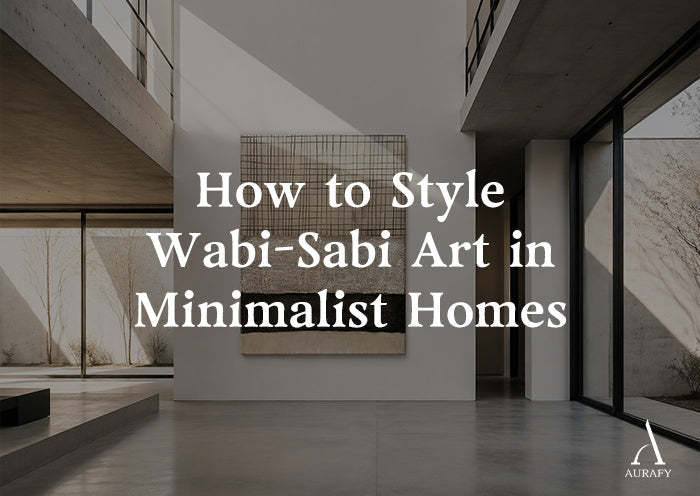
How to Style Wabi-Sabi Art in Minimalist Homes

How Do You Combine Wabi-Sabi Art With Modern Minimalism?

The best way to integrate wabi-sabi wall art into a modern minimalist interior is to use texture, material contrast, and intentional simplicity rather than adding more decorative elements. Wabi sabi minimalist wall art is especially effective because it adds handcrafted texture while preserving visual simplicity.
Modern minimalism usually focuses on:
clean architectural lines
limited visual distractions
functional spaces
restrained color palettes
Wabi-sabi introduces a different type of richness through:
natural variation
handmade surfaces
imperfect details
material character
Together, these approaches create a balance between precision and organic expression.
The goal is not to make a minimalist home look rustic or heavily decorated. It is to introduce enough texture and individuality that the space feels considered rather than empty.
Understanding the Difference Between Minimalism and Wabi-Sabi

Although modern minimalist interiors and wabi-sabi-inspired spaces can look similar, they come from different ideas.
These styles can overlap visually, but they are not interchangeable.
Wabi-sabi is a Japanese aesthetic sensibility rather than a decorating formula. It is connected with ideas of impermanence, simplicity, and appreciation of natural variation.
Modern minimalism is a contemporary design approach focused more on reduction, clarity, and functional simplicity.
A successful interior respects both ideas instead of treating wabi-sabi as simply “adding rough texture.”
For homeowners searching for wabi sabi art for minimalist home interiors, the best results come from balancing natural materials, restrained color, and authentic craftsmanship.
The “Less, But More Material” Approach

Minimalist interiors often have fewer objects, which means each chosen element carries more visual importance.
Instead of adding multiple decorative items, wabi-sabi artwork can introduce depth through the qualities of the artwork itself.
Use Texture Instead of Excess Color

Minimalist textured art creates visual interest through surface depth instead of bold decoration, making it ideal for modern minimalist interiors.
Minimalist spaces often avoid strong decorative patterns and intense color contrasts.
A textured artwork can add visual interest through:
surface variation
changing shadows
material differences
subtle tonal shifts
This allows the room to remain visually quiet while avoiding a completely flat appearance.
Create Contrast Between Smooth and Organic Surfaces

Material contrast is one of the most effective ways to combine wabi-sabi art with modern architecture.
Examples:
smooth concrete paired with textured mineral artwork
glass surfaces balanced by matte handmade textures
clean cabinetry contrasted with organic surface variation
The contrast works because each material becomes more noticeable when placed beside something visually different.
The goal is balance, not opposition.
This balance is also a defining characteristic of organic modern wall art, where handcrafted textures soften clean architectural forms.
Protect Negative Space

Minimalist interiors rely heavily on empty space.
The area around an artwork is part of the composition. Leaving breathing room allows the artwork to become a deliberate focal point instead of another item competing for attention.
There is no universal percentage or fixed measurement that works for every room. The right amount of empty space depends on:
wall size
artwork scale
furniture placement
architectural features
The principle is simple: avoid filling every available surface.
This connects with the Japanese concept of ma , which describes the meaningful relationship between occupied space and empty space.
Choosing Wabi-Sabi Art for Different Minimalist Materials

Glass and Steel Interiors
Modern spaces with large glass surfaces and metal details often have a strong sense of precision.
A textured mineral artwork can introduce a contrasting surface quality.
Suitable directions include:
charcoal textures
soft grey mineral tones
restrained earth colors
The artwork should not compete with the architecture. Instead, it should provide a quieter natural counterpoint.
Concrete and Industrial Interiors
Concrete already has a strong material identity.
Artwork can either continue that language or introduce warmth.
Good options include:
clay-inspired tones
warm beige
muted earth colors
layered grey textures
The artwork creates a conversation between two surfaces: manufactured concrete and handmade variation.
White Minimalist Apartments
White interiors often depend on subtle differences rather than strong decoration.
A monochromatic textured artwork can add depth through:
shadow
relief
surface movement
tonal variation
The result is not a dramatic contrast but a richer interpretation of the existing minimalist palette.
A neutral abstract painting can enrich an all-white palette while maintaining a calm, understated atmosphere.
Three Room Examples: Wabi-Sabi Art in Modern Homes

Case 1: The Glass-and-Steel Residence
A contemporary home with floor-to-ceiling windows, metal framing, and clean architectural lines has a highly structured visual language.
A matte charcoal or slate-toned textured artwork can soften the relationship between reflective surfaces and introduce a more organic material presence.
The artwork does not need to be large or dramatic. Its purpose is to create a different tactile quality within an otherwise precise environment.
Case 2: The Polished Concrete Loft
A loft with concrete floors, exposed surfaces, and minimal furniture already has strong industrial character.
A warm mineral artwork using oat, clay, or soft earth tones can introduce contrast while maintaining the minimalist approach.
This approach is an excellent example of how to warm up minimalist interior spaces without adding unnecessary furniture or accessories.
Instead of adding more furniture or accessories, the artwork becomes the element that brings material variation into the space.
Case 3: The Minimalist White-Box Apartment
A bright apartment with white walls and limited furnishings benefits from subtle rather than aggressive contrast.
A chalk-white, grey, or lightly textured artwork can create visual depth while preserving the room’s calm appearance.
The strongest choices are often pieces that reveal more detail when viewed closely rather than immediately dominating the room.
How to Avoid Common Styling Mistakes

Mistake 1: Adding Too Many “Natural” Elements
A common misunderstanding is that wabi-sabi requires many rustic objects.
In a minimalist home, adding too many:
ceramics
baskets
plants
decorative accessories
can work against the simplicity that makes the space effective.
One carefully selected artwork can often create more impact than many smaller additions.
Mistake 2: Choosing Texture Without Considering the Architecture
Not every textured artwork suits every minimalist interior.
A highly irregular, heavily layered piece may feel disconnected in a very precise architectural space.
Consider:
room geometry
existing materials
lighting
furniture style
The artwork should support the architecture, not fight against it.
Mistake 3: Treating Wabi-Sabi as a Color Palette Only
Many organic modern wall decor schemes rely on material contrast rather than decorative excess, aligning naturally with wabi-sabi principles.
Wabi-sabi is not simply:
beige walls
rough textures
neutral colors
The deeper idea involves appreciating material qualities and natural variation.
A black, grey, or even muted colored artwork can still work within a wabi-sabi-inspired interior if it reflects simplicity and material awareness.
Frequently Asked Questions
Can wabi-sabi art work in a modern minimalist house?
Yes. Wabi-sabi art can complement minimalist interiors by adding texture, material variation, and visual interest without requiring additional decorative objects.
This understated approach also reflects quiet luxury decor, where premium materials and thoughtful craftsmanship matter more than visual excess.
Does wabi-sabi art make a minimalist room look less modern?
Not necessarily. The result depends on the artwork choice. A restrained textured piece can enhance a modern interior while maintaining clean architectural lines.
Can textured artwork work with glass and metal furniture?
Yes. The contrast between matte organic surfaces and polished materials can create balance when the colors and proportions are carefully considered.
Should minimalist homes use large or small wabi-sabi artwork?
There is no universal rule. A larger artwork can create a clear focal point in some spaces, while smaller pieces may suit rooms with limited wall area. Scale should relate to the architecture and surrounding furniture.
Is wabi-sabi the same as Japanese minimalist design?
No. Wabi-sabi is an aesthetic sensibility related to imperfection and impermanence. Japanese minimalism and contemporary minimalist interiors may share some values, but they are not identical concepts.
Creating a Balanced Minimalist Interior With Wabi-Sabi Art

Combining wabi sabi minimalist wall art, organic modern wall art, and neutral abstract painting creates timeless interiors with warmth, depth, and simplicity.
The most successful combination of wabi-sabi art and modern minimalism comes from balance.
Modern architecture provides structure.
Wabi-sabi artwork introduces material depth.
Together, they create interiors where simplicity does not mean emptiness, and texture does not mean clutter.
If you are selecting artwork for a modern minimalist space, share your wall dimensions, architectural materials, and room photos. A tailored recommendation can help determine the right artwork scale, texture, and composition for your interior.
Share:
How Natural Light Changes Textured Wall Art
Single Canvas or Diptych? Choosing Art for Wide Walls