


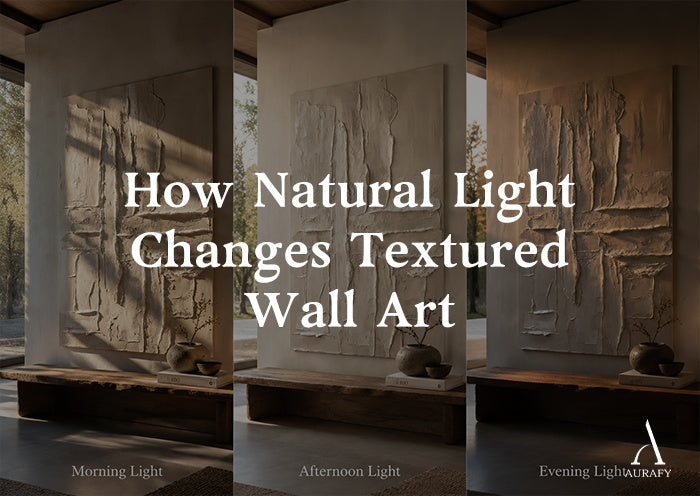
How Natural Light Changes Textured Wall Art

How Does Natural Light Affect Textured Wall Art?

Natural light changes textured wall art by altering how shadows, highlights, and surface details appear throughout the day.
This is why textured wall art natural light interaction is one of the most important factors when choosing dimensional artwork for a home. Unlike traditional prints, textured pieces such as 3D wall art and relief painting can reveal different levels of depth depending on the direction and intensity of sunlight.
Unlike flat prints, 3D textured artwork has a physical surface that interacts with changing light conditions. When sunlight hits raised areas from different directions, the visible contrast between ridges, recessed areas, and pigment variations can shift.
In general:
Lower-angle light often creates stronger shadow definition across raised textures.
More direct overhead light often reduces visible shadows and emphasizes color and surface details.
Side lighting usually reveals texture more clearly than straight-on lighting.
These changes are not signs of inconsistency. They are part of how physical textured artwork interacts with its environment.
The exact appearance depends on several factors, including:
window direction
season
geographic location
artwork surface texture
pigment and finish
distance between the window and artwork
Why Textured Artwork Changes Throughout the Day

A flat artwork mainly communicates through printed color and imagery.
A textured artwork communicates through both color and physical structure.
When natural light moves across a raised surface, it creates changing relationships between:
Understanding why textured art looks different in sunlight helps explain how highlights, shadows, and surface variations create a more dynamic visual experience.
highlights on elevated areas
shadows inside recessed areas
matte and reflective surfaces
different pigment tones
This means the same artwork can appear slightly different in the morning, afternoon, and evening.
The artwork is not changing physically from hour to hour. The way light reveals the surface is changing.
Time-of-Day Lighting and Visual Effects

These are general patterns, not fixed rules. A north-facing room, cloudy weather, seasonal changes, and different window designs can create very different results.
Window Placement: How Position Changes Texture Visibility

Artwork on a Wall Beside a Window
A wall positioned beside a window often receives angled light across the artwork surface.
This type of lighting can make raised textures easier to notice because shadows form along the surface variations.
This placement often works well for:
These lighting conditions are especially effective for textured canvas, relief painting, and artwork designed to create a natural wall art shadow effect.
textured mineral artwork
relief paintings
heavily layered surfaces
The exact effect depends on the window size, distance, and the artwork's surface structure.
Artwork Facing a Window Directly
When artwork faces a window, light often reaches the surface more evenly.
This can reduce dramatic shadow contrast because the raised areas and recessed areas receive more similar illumination.
However, this placement can still work well when the goal is to highlight:
subtle color transitions
material grain
overall composition
A softer texture may benefit from this type of lighting.
Artwork Near a Skylight or Top Lighting
Light from above creates a different effect from side lighting.
Instead of emphasizing horizontal shadow movement, overhead light often highlights the vertical structure of raised surfaces.
The result depends on:
skylight position
ceiling height
artwork orientation
time of year
Because skylight conditions vary significantly, testing the placement in the actual room is usually the best approach.
Why Matte Textures Often Work Well With Natural Light

Surface finish has a major impact on how artwork responds to daylight.
Matte textured surfaces generally create softer reflections because they scatter light across the surface rather than producing strong highlights.
This can help emphasize:
subtle texture changes
natural pigment variation
material depth
By contrast, glossy finishes can create stronger reflections that may compete with the texture underneath.
Neither finish is universally better. The ideal choice depends on the interior style and the desired visual effect.
For calm, natural interiors such as wabi-sabi or minimalist spaces, matte surfaces often complement surrounding materials like:
A matte textured surface is often considered the best lighting approach for plaster wall art because it allows subtle texture and material depth to remain visible without distracting reflections.
plaster
linen
wood
stone
Natural Light and Long-Term Artwork Care

Natural light is an important consideration when choosing artwork placement.
Extended exposure to direct sunlight can affect some art materials over time. The degree of change depends on:
pigment type
binder materials
protective finishes
window glass
exposure duration
No artwork material is completely unaffected by environmental conditions.
For rooms with strong daily sunlight, practical considerations include:
avoiding prolonged direct sun exposure when possible
using window treatments if needed
discussing material suitability with the artist or studio
Good placement is not about preventing all light exposure. It is about creating a balance between enjoying the artwork and protecting the materials.
The Relationship Between Light and Material Authenticity

One reason textured artwork feels different from printed artwork is that real surfaces respond to changing environments.
This explains why 3D wall art and shadow art can feel more alive than flat artwork: the surface itself participates in the viewing experience.
A printed image reproduces shadows and highlights as fixed visual information.
A textured surface creates actual changes in appearance because the surface itself interacts with light.
This difference becomes especially noticeable when:
walking past the artwork
viewing it from different angles
observing it at different times of day
The changing appearance comes from the relationship between material, structure, and light.
How to Position Textured Wall Art for Better Light Interaction

Observe the Room Before Hanging the Artwork
Before installation, notice:
where sunlight enters
which walls receive direct light
how shadows move during the day
where people naturally view the artwork from
A few observations can help determine the most suitable wall position.
Avoid Choosing Placement Based Only on Empty Wall Space
The largest empty wall is not always the best location.
A slightly smaller wall with better natural light may allow textured artwork to show more depth and character.
Consider both:
architectural balance
lighting conditions
Test the Artwork at Different Times
If possible, evaluate the artwork:
in morning light
during afternoon light
under evening lighting
This helps reveal how the surface behaves in the actual environment.
Frequently Asked Questions
Why does my textured painting look flatter at midday?
Higher-angle light can reduce the shadows created by raised surfaces, making the texture appear less dramatic. During lower-angle lighting conditions, surface variations may become easier to see.
Does direct sunlight damage textured wall art?
Long-term direct sunlight can affect some pigments and materials. The level of change depends on the artwork's specific materials, protective coatings, and exposure conditions.
Where should I place 3D textured wall art for the strongest texture effect?
For homeowners searching for the best lighting for plaster wall art, angled natural light is usually the most effective way to reveal raised textures and create dimensional depth.
Many textured artworks show more visible surface variation when light reaches them from an angle rather than directly from the front. However, the best placement depends on the room, window position, and artwork design.
Does textured artwork look different in photos compared with real life?
Yes. Cameras often capture only one lighting condition and viewing angle. Physical texture can appear different as natural light changes and as viewers move around the room.
Should I use artificial lighting for textured artwork at night?
Angled accent lighting often helps reveal surface variation more effectively than flat front lighting. The best setup depends on the artwork, room layout, and desired atmosphere.
Making the Most of Natural Light and Textured Artwork

Textured wall art is designed to interact with the space around it.
Choosing textured wall art natural light compatibility helps ensure that the artwork continues to reveal its texture, shadow movement, and material character throughout the day.
The most successful placement considers not only wall size and furniture arrangement, but also how natural light moves through the room.
A carefully positioned textured artwork can reveal different aspects of its surface throughout the day, creating a changing relationship between material, shadow, and atmosphere.
If you are selecting artwork for a specific room, share photos of the wall at different times of day, along with the room layout and lighting conditions. This can help determine the placement and artwork style that best suits the space.
Share:
Black Wabi-Sabi Art: Adding Depth Without Darkening Rooms
How to Style Wabi-Sabi Art in Minimalist Homes