


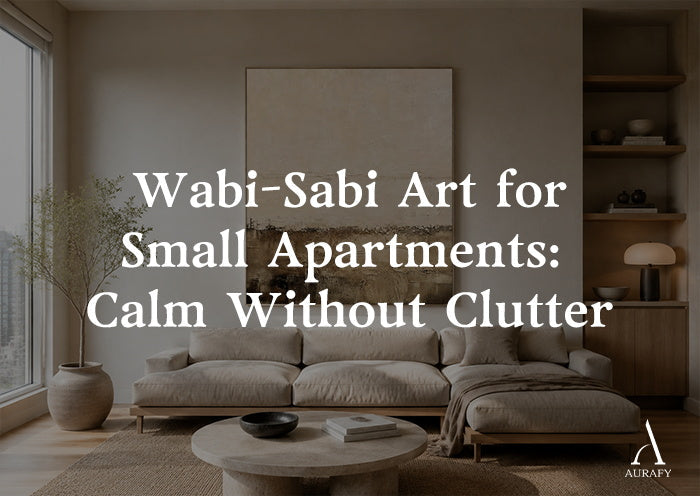
Wabi-Sabi Art for Small Apartments: Calm Without Clutter

How to Use Wabi-Sabi Art in Compact Spaces

Choosing wabi-sabi wall art for a small apartment requires a different approach from decorating a large home. Limited wall space means every artwork needs to contribute to the room without creating visual overload.
The most effective strategy is usually simplicity: choose one meaningful focal piece rather than filling every available wall with multiple decorative elements.
Wabi-sabi art works especially well in compact interiors because it focuses on qualities that do not require excessive decoration:
natural materials
subtle texture
quiet colors
handmade character
intentional empty space
The goal is not to make a small apartment feel crowded with objects. Instead, the artwork should create a sense of warmth and individuality while allowing the room to remain visually open.
Why One Strong Artwork Often Works Better Than Many Small Pieces

Gallery walls can create beautiful results, but they require enough surrounding space for each individual piece to remain visually distinct.
In a smaller apartment, multiple frames can introduce more lines, edges, and transitions. When a room already contains furniture, storage, lighting, and daily-use objects, additional visual divisions may make the space feel more complicated.
A single larger piece creates a clearer focal point.
For example, a vertical textured artwork can add height and material interest while using only one area of the wall. Instead of creating several competing points of attention, one carefully selected piece gives the room a consistent visual anchor.
This does not mean small apartments should only use large artwork. The key is intentional selection. A well-proportioned piece usually works better than a collection of unrelated decorations.
Choosing the Right Artwork Format for Small Apartments

Vertical Artwork for Narrow Walls
Vertical compositions are often effective in compact spaces because they work with the height of the room rather than requiring a wide horizontal area.
They can be especially suitable for:
narrow entry walls
spaces beside furniture
apartment corridors
walls between functional zones
A vertical wabi-sabi painting with soft mineral tones can introduce texture without taking up valuable floor space.
Horizontal Artwork for Sofas and Open Walls
Horizontal pieces can work well above:
compact sofas
dining areas
low cabinets
desks
The important factor is proportion. Artwork should relate to nearby furniture rather than simply filling the largest possible area.
A wide but shallow composition can create balance when the room already has strong horizontal elements, such as a sofa, table, or media console.
Multi-Panel Artwork for Flexible Layouts
Diptychs and triptychs can provide flexibility in apartments where wall dimensions are unusual.
Instead of one oversized piece, multiple connected panels can distribute the artwork across a wall while maintaining a unified composition.
For wabi-sabi interiors, the panels should feel connected through:
similar materials
consistent color language
related textures
balanced spacing
The goal is continuity rather than a collection of separate decorations.
Small Apartment Layout Guide

|
Apartment Area |
Common Challenge |
Recommended Artwork Approach |
Placement Consideration |
|
Compact entryway |
Narrow wall and limited depth |
Slim vertical artwork with soft neutral tones |
Keep enough clearance around doors and pathways |
|
Small living room |
Furniture occupies most visual space |
One medium or large focal artwork above the sofa |
Connect artwork width with sofa proportions |
|
Studio apartment |
Living and sleeping areas share one room |
A single textured piece to define the main zone |
Use artwork to create visual organization without physical barriers |
|
Dining corner |
Limited wall area near furniture |
Simple horizontal artwork or small coordinated pair |
Maintain balance with table width and lighting |
How Texture Works in Small Spaces

Texture is one of the reasons wabi-sabi art can work especially well in compact interiors.
A flat print creates visual information through color and imagery alone. A textured artwork introduces another layer: the way the surface catches light and reveals material variation.
In a small apartment, this can add character without requiring additional furniture or decorative objects.
However, texture should still support the room.
For smaller spaces, artwork with controlled texture often works better than extremely dramatic surfaces. The ideal piece adds depth while remaining connected to the room's overall atmosphere.
Color Choices for Small Apartment Wabi-Sabi Art

Color plays an important role in maintaining balance.
Light Neutral Tones
Soft shades such as:
warm white
sand
stone grey
pale clay
can integrate naturally with small rooms because they maintain a quiet relationship with surrounding walls.
Earth-Inspired Colors
Muted natural tones can add warmth:
weathered brown
soft charcoal
faded green
terracotta
These colors often work well with materials commonly found in wabi-sabi interiors, such as wood, linen, and plaster.
Dark Artwork as an Accent
Dark artwork can also work in small apartments when used intentionally.
A charcoal or black textured piece can create contrast against a lighter wall and establish a focal point.
The key is balance. Dark colors should support the room rather than dominate a limited space.
Renter-Friendly Artwork Installation Considerations

Small apartments are often rented, which makes installation an important consideration.
Before hanging textured or heavier artwork:
check the wall type
understand any rental restrictions
choose appropriate mounting hardware
consider whether the artwork may need to be moved later
Different walls require different solutions. A lightweight piece may only need simple hanging hardware, while larger textured artwork may require stronger support.
The safest approach is always to use mounting methods appropriate for the actual artwork weight and wall construction.
Can Large Artwork Work in a Small Apartment?

Yes.
A common misconception is that small rooms require only small artwork.
In many cases, one well-proportioned larger piece creates a cleaner result than several small decorations.
The important factors are:
artwork scale relative to furniture
surrounding empty space
color relationship with the room
overall visual balance
A large artwork should feel intentional, not oversized.
The goal is not to fill every wall. It is to choose pieces that contribute meaningfully to the room.
Creating Zones Without Adding Clutter
Many small apartments combine multiple functions:
living room and workspace
bedroom and lounge area
dining and kitchen areas
Artwork can help visually organize these spaces without adding physical barriers.
For example:
a textured piece above a sofa can define the living area
artwork near a desk can create a focused workspace atmosphere
a calm composition near the bed can separate the sleeping zone visually
This approach follows the wabi-sabi principle of thoughtful simplicity: fewer elements, chosen carefully.
Understanding Wabi-Sabi Beyond Small Space Design

Wabi-sabi is not simply a minimalist decoration trend.
It is a Japanese aesthetic sensibility that values imperfection, impermanence, simplicity, and appreciation of natural materials.
In interior design, this often translates into:
handmade objects
visible material qualities
natural textures
understated compositions
A small apartment does not need to imitate a traditional Japanese space to embrace wabi-sabi. The principle is more about creating a relationship between objects, materials, and the way people experience the space.
Frequently Asked Questions
Can large wall art work in a small apartment?
Yes. A properly scaled large artwork can often create a stronger focal point than multiple smaller pieces. The key is choosing a size that relates to the furniture and wall dimensions.
Does wabi-sabi art make a small room look bigger?
Wabi-sabi art does not physically change the size of a room. However, carefully selected artwork with balanced proportions, light tones, and restrained texture can help create a more organized and visually comfortable environment.
What colors work best for wabi-sabi art in small spaces?
Soft neutrals, mineral tones, and muted earth colors usually work well because they connect naturally with materials such as wood, linen, plaster, and stone.
Should I choose one large artwork or several small pieces?
In many small apartments, one strong focal piece creates a cleaner appearance than multiple unrelated artworks. However, a coordinated multi-panel arrangement can also work when the composition suits the wall.
Can textured artwork be used in a rental apartment?
Yes, but installation should always consider the artwork size, wall type, mounting method, and rental requirements.
Creating Calm Through Intentional Choice

The best wabi-sabi wall art for a small apartment is not necessarily the smallest piece. It is the piece that creates the right relationship between texture, proportion, and the surrounding space.
A thoughtfully selected artwork can add personality without adding clutter, helping a compact home feel more connected, balanced, and intentional.
If you are choosing artwork for a small apartment, share your wall measurements, furniture layout, and existing materials. A tailored recommendation can help determine the right scale, format, and texture for your space.
Share:
Wabi-Sabi Bedroom Art: Creating a Calmer Space
Plaster vs. Oil vs. Acrylic: Best Medium for Textured Art?