


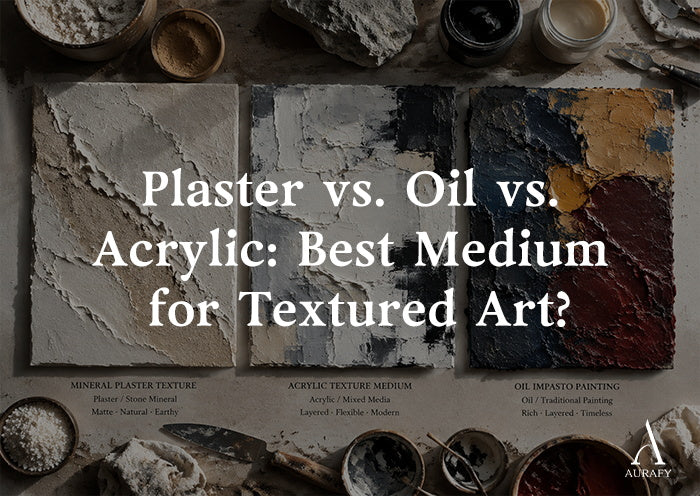
Plaster vs. Oil vs. Acrylic: Best Medium for Textured Art?
Direct Answer: Which Medium Is Best for Textured Art?

There is no single “best” medium for every textured artwork. The right choice depends on the visual effect, surface character, installation needs, and the type of interior where the artwork will be displayed.
For deep, matte, mineral-like texture, plaster and lime-based materials are often preferred because they naturally create a stone-like surface with strong tactile character.
For flexibility and lighter construction, acrylic texture mediums offer practical advantages and can create raised surfaces with a wide range of finishes.
For rich color depth and traditional painterly effects, oil paint remains valued for its blending ability, luminosity, and long history in fine art.
The main difference is not quality versus quality. Each medium creates a different relationship between color, texture, light, and material presence.
Textured Art Medium Comparison
|
Feature |
Mineral Plaster / Lime-Based Paste |
Acrylic Texture Medium |
Traditional Oil Paint |
|
Surface character |
Matte, mineral, stone-like texture |
Flexible raised texture with varied finishes |
Rich painted surface with traditional depth |
|
Texture potential |
Suitable for substantial relief and sculptural surfaces |
Suitable for light to moderate raised effects |
Usually focused on brushwork and impasto |
|
Light response |
Absorbs and diffuses light softly |
Depends on the specific acrylic formulation |
Often reflects more light, especially with varnish |
|
Material feeling |
Earthy, architectural, organic |
Modern, adaptable, versatile |
Classic, expressive, painterly |
|
Flexibility |
Requires stable support because mineral surfaces are rigid |
More flexible due to polymer-based binders |
Becomes more rigid as layers age |
|
Best suited for |
Wabi-sabi, minimalist, architectural interiors |
Contemporary decorative and mixed-media work |
Traditional painting and expressive color-focused artwork |
Mineral Plaster: Texture That Feels Like Architecture

Mineral plaster and lime-based materials have a unique relationship with texture because the material itself contributes to the artwork.
Instead of creating the illusion of depth through painted shadows, the surface variation comes from the actual structure of the material.
This creates several visual qualities:
matte light absorption
natural surface variation
organic edges
connection with architectural materials such as stone, clay, and plaster walls
This makes mineral-based textured art especially suitable for interiors that emphasize natural materials and quiet surfaces.
A wabi-sabi wall art piece made with mineral textures can complement spaces featuring linen, wood, stone, and handmade ceramics because both the room and artwork share a similar material language.
However, mineral surfaces also require thoughtful handling. Because the material cures into a more rigid structure, the artwork benefits from a stable backing and careful transportation.
Acrylic Texture Medium: Flexible and Versatile

Acrylic texture mediums are widely used in contemporary textured artwork because they combine visual flexibility with practical advantages.
Acrylic-based materials can create:
raised surfaces
layered textures
mixed-media effects
a variety of finishes from matte to satin
One advantage of acrylic is flexibility. Compared with more rigid mineral materials, acrylic surfaces can better tolerate small movements caused by handling or changes in environment.
This makes acrylic a practical option for artists who prioritize versatility, lighter construction, or experimental techniques.
The final appearance depends greatly on the specific acrylic formulation, additives, pigments, and finishing methods used by the artist.
Oil Paint: Traditional Depth and Color Expression

Oil paint has a long history because of its ability to create rich colors, smooth transitions, and expressive brushwork.
Its strengths include:
deep color mixing
gradual blending
luminous layers
traditional painterly character
Oil can also create texture through techniques such as impasto, where thick paint is applied to produce visible brush marks and raised areas.
However, oil paint is generally chosen for its color behavior and expressive qualities rather than maximum physical relief.
The final appearance can also change depending on varnish choices, lighting conditions, and the aging behavior of the materials.
How Each Medium Responds to Light

Light is one of the most important factors in textured artwork because texture is experienced through shadow, reflection, and surface variation.
Mineral Surfaces
Mineral textures usually create a softer, quieter response.
Their matte surfaces reduce strong reflections and allow subtle variations in the surface to become visible.
This makes them especially suitable for:
minimalist interiors
natural material palettes
rooms with strong architectural finishes
Acrylic Surfaces
Acrylic texture can respond differently depending on the finish.
A matte acrylic surface may create a soft appearance, while a satin or glossy finish can introduce more reflection.
The artist’s choice of medium and finishing layer strongly influences the final result.
Oil Surfaces
Oil paintings often have a richer visual depth because of the way oil binders interact with pigment.
However, glossy finishes or varnishes may create noticeable reflections depending on the room lighting and viewing angle.
Choosing the Right Medium for Your Interior

Choose Mineral Plaster or Lime-Based Texture If You Prefer:
natural material character
matte surfaces
architectural texture
wabi-sabi or minimalist interiors
artwork that feels connected to stone, clay, or plaster
Choose Acrylic Texture If You Prefer:
flexible techniques
lighter construction
experimental surfaces
contemporary mixed-media approaches
Choose Oil Paint If You Prefer:
traditional fine-art qualities
rich color transitions
expressive brushwork
painterly depth
Common Misconceptions About Textured Artwork

“More Texture Always Means Better Art”
Not necessarily.
Texture should support the artistic intention and the surrounding space. Extremely heavy texture may overwhelm a quiet interior, while subtle texture may be more appropriate for a refined minimalist room.
“Handmade Texture Is Always Superior”
Handmade processes create unique characteristics, but quality depends on execution, material choices, and artistic decisions.
A carefully designed flat painting can be more successful than a poorly executed textured piece.
“All Textured Art Uses the Same Materials”
Textured artwork can be created with many different materials, including plaster, acrylic mediums, natural pigments, fabric, paper, and mixed media.
The material determines the surface behavior and visual experience.
Frequently Asked Questions
Is plaster better than acrylic for textured wall art?
Neither is universally better. Plaster creates a more mineral, architectural surface, while acrylic offers flexibility and versatility. The better choice depends on the desired appearance and practical requirements.
Does textured plaster artwork crack?
Mineral-based surfaces can develop natural variation during drying and aging. Proper material preparation, stable support, and appropriate handling help reduce unwanted damage.
Which textured art medium works best for wabi-sabi interiors?
Mineral-based materials often pair naturally with wabi-sabi interiors because they emphasize natural texture, material honesty, and subtle variation.
Is oil paint good for creating textured artwork?
Yes. Oil paint can create texture through techniques such as impasto, although it is generally selected for color depth and expressive qualities rather than large sculptural relief.
How can I choose the right textured artwork for my room?
Consider the room’s materials, lighting, color palette, and the atmosphere you want to create. A sample or close view of the actual texture is often more useful than judging only from online images.
Choosing the Right Textured Artwork Medium

The best medium is the one that supports both the artwork and the space around it.
Mineral plaster, acrylic, and oil each create a different visual language. Understanding how each material responds to texture, light, and interior style makes it easier to choose artwork that feels intentional rather than simply decorative.
If you are selecting textured artwork for a specific room, consider the wall material, lighting conditions, and surrounding furniture. These details help determine whether a mineral, acrylic, or oil-based piece will create the right balance of texture and atmosphere.
Take a look at our 3D textured painting right now! Choose the appropriate wall art for the decoration of your home.
Share:
Wabi-Sabi Art for Small Apartments: Calm Without Clutter
Handmade vs. Mass-Produced Wabi-Sabi Art