


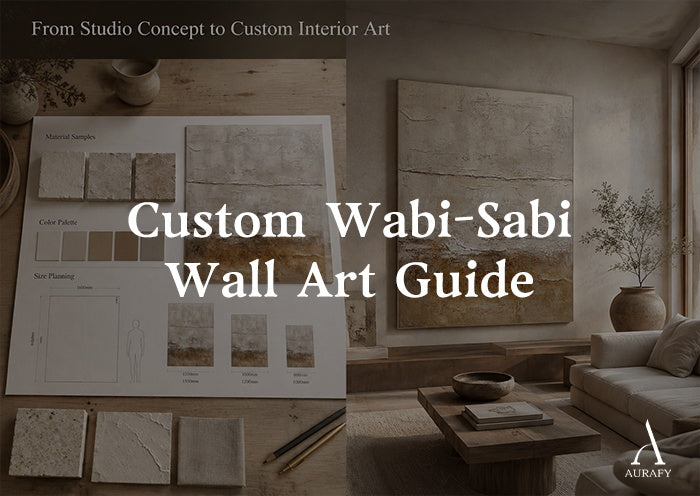
Custom Wabi-Sabi Wall Art Guide

How Does Custom Wabi-Sabi Art Work?

Custom wabi-sabi wall art allows you to create artwork that fits your specific space through adjustments to size, color direction, composition, and surface texture. This process is often chosen for **custom canvas art** that is designed specifically for a customer's interior space.
A successful custom commission usually depends on four things:
accurate wall and room measurements
clear material and color references
realistic expectations about handmade variation
communication with the studio throughout the process
Unlike selecting a finished artwork from a catalog, a custom piece requires decisions before production begins. Planning these details early helps ensure the final artwork feels connected to the architecture around it. A commissioned painting allows the artist and customer to discuss size, colors, materials, and composition before production begins.
The Custom Wabi-Sabi Art Process
Step 1: Define Your Wall, Space, and Practical Requirements
Every custom artwork begins with the space where it will be installed.
Before contacting a studio, prepare:
wall width and height
ceiling height
furniture dimensions nearby
installation location
preferred artwork orientation
Photos of the room are also useful because dimensions alone do not show:
natural lighting conditions
surrounding materials
visual balance
furniture placement
A studio can then suggest artwork proportions that suit the actual environment rather than creating a piece based only on a size number.
Step 2: Choose Color Direction and Material References
Color is one of the most important decisions in a custom artwork, but digital references have limitations.
Instead of describing a color only as: These references are useful when customers want to choose custom painting colors that work with their existing interior.
warm beige
soft grey
earthy brown
provide additional references such as:
paint colors
fabric samples
furniture finishes
interior photos
These references help communicate the overall direction.
However, handmade mineral artwork will naturally have some variation because materials, surface texture, and lighting affect how color appears.
The goal is visual harmony, not a perfect digital color match.
Step 3: Define Texture and Surface Character
Texture is what often separates wabi-sabi-inspired artwork from flat decorative pieces. Many customers also request a custom size textured painting with a specific surface character and level of relief.
Before production, discuss:
how subtle or dramatic the relief should feel
whether the surface should appear smooth, layered, cracked, or organic
whether the artwork should feel calm and minimal or more expressive
A useful approach is to share examples of artworks you like and explain what attracts you about them:
color
texture
movement
overall atmosphere
This gives the artist clearer direction than simply requesting “more texture.”
Step 4: Production and Material Curing
Once the design direction is confirmed, the artwork enters production.
For textured mineral artwork, the timeline depends on factors such as:
artwork size
material thickness
environmental conditions
finishing process
Some mineral-based textured pieces require a curing period before final preparation.
The exact timing varies between studios and materials, so a realistic schedule should be confirmed before ordering.
A custom artwork usually involves more time than a ready-made piece because it includes planning, production, review, finishing, and shipping preparation. This is why made to order wall art requires more planning than selecting a finished artwork.
Step 5: Review, Final Finishing, and Delivery
Many studios provide progress photos or videos during production.
This stage is useful for confirming:
overall composition
general color direction
surface development
However, major changes become increasingly difficult after the material has been applied and cured.
Before final delivery, confirm:
protective finishing
packaging method
shipping arrangements
installation requirements
Large textured artwork may require careful handling because the surface structure can be more delicate than a flat canvas.
What to Prepare Before Ordering Custom Artwork
|
Preparation Item |
Why It Matters |
What to Provide |
|
Wall measurements |
Helps determine suitable proportions |
Width, height, and available wall space |
|
Room photos |
Shows architecture and lighting |
Images from different viewpoints |
|
Color references |
Helps communicate the desired palette |
Paint samples, fabric, furniture photos |
|
Texture examples |
Clarifies the desired surface style |
Reference artworks or descriptions |
|
Installation details |
Helps plan practical requirements |
Wall type, location, access conditions |
Understanding Color Differences Between Screen and Artwork

One of the most important expectations in custom artwork is understanding that digital colors and physical materials behave differently.
Screens create color through backlit pixels.
Physical artwork creates color through:
reflected light
pigments
surface texture
surrounding lighting
Because of this, a digital image or screen color cannot guarantee an exact match with the final artwork.
Natural mineral materials may also show subtle variation because handmade surfaces are influenced by:
pigment characteristics
material mixing
application method
drying conditions
These differences are not necessarily imperfections. They are part of the nature of handmade artwork.
Setting Realistic Expectations for Custom Changes
Custom artwork requires decisions at the right stage.
Before production: Understanding how to commission wabi sabi art helps customers prepare the right information before production begins.
color direction can be adjusted
composition preferences can be discussed
size options can be reviewed
During production:
minor adjustments may still be possible depending on the material stage
After the artwork has fully cured:
significant changes to texture or composition are usually difficult without recreating parts of the work
Clear communication before production begins helps avoid disappointment later.
Choosing the Right Size for Custom Wabi-Sabi Art
The correct size depends on the relationship between the artwork and the room.
Consider:
Wall Proportion
A large empty wall may need a larger artwork to avoid looking disconnected.
A smaller wall may benefit from a more restrained composition that leaves surrounding space visible.
Furniture Relationship
Artwork should relate visually to nearby furniture.
For example:
artwork above a sofa should feel balanced with the seating area
artwork in an entryway should respond to the available wall width
artwork above a console should not feel oversized compared with the furniture below
There is no universal size formula. The right proportion depends on the entire composition.
Three Practical Custom Wabi-Sabi Artwork Examples
Case 1: Minimalist Concrete Interior
A home with concrete floors, plaster walls, and simple furniture may benefit from:
soft grey mineral tones
subtle raised texture
restrained composition
The artwork introduces organic variation while keeping the architectural simplicity intact.
Case 2: Warm Natural Material Interior
A room with oak furniture, linen textiles, and natural fibers may suit:
clay tones
warm beige
earthy mineral textures
The artwork connects with existing materials without requiring additional decoration.
Case 3: Large Architectural Feature Wall
A tall or wide feature wall may require:
larger scale
stronger visual presence
carefully planned proportions
A custom piece allows the artwork to be designed around the specific dimensions instead of forcing a standard-size painting into the space. This flexibility makes personalized painting suitable for unique architectural spaces.
Why Custom Wabi-Sabi Art Requires Careful Planning

The appeal of wabi-sabi-inspired artwork comes from its relationship between material, process, and environment.
A successful piece should not simply copy an unfinished appearance.
It should consider:
how materials age
how texture interacts with light
how the artwork fits the surrounding architecture
Custom work creates an opportunity to build that relationship intentionally.
Frequently Asked Questions
How long does a custom wabi-sabi painting take?
The timeline varies depending on the studio, artwork size, materials, and production process. Custom pieces usually require time for design discussion, creation, finishing, and delivery preparation.
Can I change the texture after the artwork is finished?
Major texture changes are usually difficult after the material has cured. It is best to discuss texture preferences before production begins.
Will custom artwork match my room colors exactly?
Not always. Physical materials and lighting create natural variation. Providing paint references, fabrics, and room photos helps improve color consistency, but handmade mineral surfaces will not behave exactly like digital images.
Is custom artwork more expensive than ready-made pieces?
Custom artwork often involves additional planning and production steps, so pricing depends on factors such as size, materials, complexity, and studio process.
What information should I send before ordering custom wall art?
Useful information includes:
wall dimensions
room photos
preferred colors
furniture materials
artwork references
installation location
Start Your Custom Wabi-Sabi Artwork Project

A custom wabi-sabi wall art piece should feel connected to the room it enters. A custom wabi sabi wall art project succeeds when measurements, references, and artistic direction work together.
The best results come from combining accurate measurements, clear references, and realistic expectations about handmade materials.
If you are planning artwork for a specific wall, share your dimensions, interior photos, and preferred style direction. A studio can then help develop a custom proposal suited to your space.
Share:
How to Clean Textured Plaster Art Safely
Buying Wabi-Sabi Wall Art Online Guide