


How to Clean Textured Plaster Art Safely

The Safest Cleaning Method

The safest way to clean textured plaster wall art is to start with dry dust removal and avoid unnecessary moisture, chemicals, or pressure. If you are wondering how to clean textured wall art without flattening the relief, begin with the gentlest dry method first.
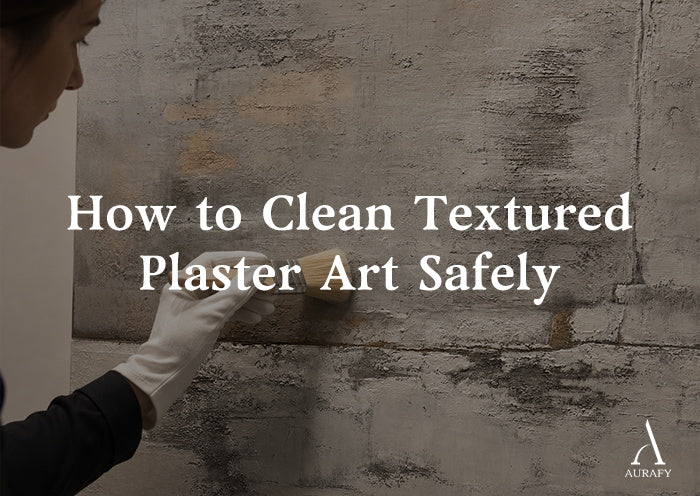
For most raised mineral surfaces, use a soft natural-bristle brush or feather duster to remove loose dust. For deeper texture, a vacuum with a soft brush attachment can help when used carefully at low suction without pressing against the artwork.
The correct cleaning method depends on the material and finish. Unsealed mineral plaster, sealed acrylic relief, and other textured surfaces do not all respond the same way, so always confirm the plaster art care instructions provided by the artist or studio.
Textured Art Cleaning Guide by Material
|
Artwork Surface |
Recommended Cleaning Method |
General Frequency |
Avoid |
|
Unsealed mineral plaster or lime-based texture |
Soft natural-bristle brush, feather duster, low-suction vacuum with brush attachment |
Every few months or when dust appears |
Water, cleaning sprays, abrasive cloths, strong brushing |
|
Sealed acrylic relief texture |
Soft dry cloth or duster; lightly damp cloth only if the finish allows |
As needed |
Chemical cleaners, alcohol-based products, rough scrubbing |
|
Deep grooves and recessed texture |
Soft brush or carefully controlled low-suction cleaning |
Occasional maintenance |
Sharp tools, stiff brushes, direct compressed air pressure |
These are general guidelines. The safest approach is always to follow the cleaning recommendations for the exact material, sealant, and finish used on your artwork, especially when comparing canvas cleaning with textured painting maintenance.
Step-by-Step Dust Removal Method

Step 1: Remove Loose Surface Dust
Begin with the least aggressive method.
Use:
· soft feather duster
· clean natural-bristle brush
· soft artist brush for small details
Move gently across the surface instead of pushing dust deeper into the texture. If your main question is can you dust plaster wall art, the answer is yes, but only with soft, dry tools and very light contact.
Step 2: Clean Deeper Texture Carefully
For artwork with recessed areas:
· use a vacuum with a soft brush attachment
· keep suction low
· avoid touching raised edges directly
Deep relief creates beautiful shadows, but the raised sections can also be more vulnerable to accidental pressure.
Step 3: Avoid Moisture Unless the Surface Allows It
Unsealed mineral surfaces can absorb water.
Moisture may cause:
· temporary darkening
· staining
· uneven appearance
· changes in the surface texture
If a sealed artwork allows light cleaning with water, use only a slightly damp soft cloth and avoid soaking the surface. The same cautious rule applies when deciding how to clean 3d canvas art with raised details.
Protecting Textured Art From Environmental Damage

Humidity and Temperature Changes
Textured artwork responds to its environment because it contains natural materials and layered surfaces.
Rather than focusing on one perfect humidity number, avoid extreme and prolonged environmental changes whenever possible.
Helpful practices include:
· avoiding damp walls
· maintaining stable indoor conditions
· keeping artwork away from areas with frequent moisture exposure
Large changes in humidity can affect both the artwork surface and its support structure over time, so placement is one of the easiest ways to protect textured art from humidity.
Sunlight Exposure
Natural light can enhance textured artwork by creating changing shadows across the relief.
However, prolonged direct sunlight can affect some pigments and materials over time.
For walls receiving strong daily sunlight:
· consider indirect placement
· use window treatments if appropriate
· ask the studio about pigment and finish characteristics
No artwork material is completely unaffected by years of intense UV exposure.
Kitchen and High-Moisture Areas
Textured artwork placed near kitchens, sinks, or cooking areas requires additional consideration.
Unsealed porous surfaces may absorb:
· grease particles
· steam
· airborne residue
For these environments, a properly sealed surface or a location away from direct cooking exposure is usually easier to maintain.
Handling and Moving Textured Artwork Safely
How to Lift a Textured Painting
Always handle artwork by its structural support.
Recommended:
· hold the frame or stretcher bars
· support the weight evenly
· keep hands away from raised texture
Avoid pressing directly on the relief surface, since pressure can damage fragile raised areas.
How to Pack Textured Art for Moving
When relocating artwork:
Protect corners first.
Place a non-abrasive barrier over the surface.
Add cushioning without compressing the texture.
Use a rigid outer container for larger or heavier pieces when possible.
Bubble wrap or packaging material should not press directly against delicate raised areas, as pressure may leave marks.
When Should You Contact a Professional?
Some surface changes are part of how textured materials naturally behave.
For example:
· small surface variations during curing may be normal
· subtle changes in texture may develop over time
However, professional assessment is recommended for:
· deep structural cracks
· loose sections of relief
· separation between layers
· significant discoloration
· missing material
Attempting repairs with unrelated materials can make restoration more difficult.
Long-Term Care: What Owners Should Know
Textured plaster artwork is not maintenance-free.
Like other natural materials such as stone, clay, or wood, it can gradually change with:
· light exposure
· environmental conditions
· aging
These changes are not necessarily damage. However, proper placement, gentle maintenance, and thoughtful art preservation habits can help preserve the artwork's intended appearance.
Routine care and professional restoration are different processes:
Routine care includes:
· dust removal
· careful handling
· environmental awareness
Restoration includes:
· repairing structural damage
· replacing missing material
· correcting major surface changes
Restoration work should be handled by someone experienced with the specific artwork material.
Frequently Asked Questions
Can I clean 3D plaster art with a microfiber cloth?
For unsealed textured plaster, it is generally better to avoid microfiber cloths. Fibers can catch on rough edges or raised areas. A soft brush is usually a safer option for delicate relief surfaces.
What should I do if water gets on unsealed textured artwork?
Do not rub the surface. Gently remove excess moisture if possible and allow the area to dry naturally. Because mineral surfaces vary, contact the studio for advice if staining or discoloration appears.
How do I remove a small stain from plaster wall art?
Avoid experimenting with household cleaners. The correct treatment depends on the material, pigment, and sealant. Contact the original studio or a professional conservator before attempting repair.
Does textured plaster art become damaged as it ages?
Not necessarily. Natural materials can develop gradual changes over time. Small variations may contribute to the character of the piece, while structural damage requires evaluation.
Care Support for Your Artwork

Proper care begins with understanding the exact materials used in your piece.
Explore textured artwork collections with detailed material information, or contact the studio for care recommendations based on your artwork’s surface and finish.
Share:
How to Style a Wabi-Sabi Triptych
Custom Wabi-Sabi Wall Art Guide