


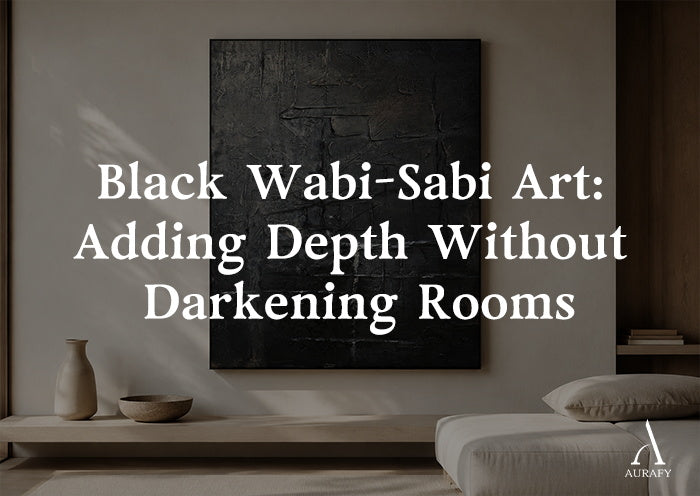
Black Wabi-Sabi Art: Adding Depth Without Darkening Rooms

Can Black Art Work in a Wabi-Sabi Interior?

Yes. Black wabi-sabi wall art can work beautifully in a calm, natural interior when it is used as a material and textural element rather than simply a bold color statement.
High-quality black wabi sabi wall art creates depth through texture rather than heavy color, making it suitable for calm minimalist and Japandi-inspired interiors.
The key is balance.
In wabi-sabi interiors, black is often most effective when it appears as:
charcoal rather than pure glossy black
a matte surface rather than a reflective finish
a natural accent rather than the dominant feature
part of a larger relationship between light, texture, and material
A black artwork does not automatically make a room feel smaller or darker. Its impact depends on the surrounding walls, lighting, furniture, surface texture, and overall composition.
When thoughtfully selected, black textured artwork can create contrast, visual grounding, and a stronger connection between different materials in a room.
Why Black Works in Wabi-Sabi Design

Black as a Natural Material Tone
Wabi-sabi interiors often draw inspiration from materials that naturally contain deep tones:
charred wood
dark stone
aged metal
charcoal
shadowed earth
Because of this connection, black can feel organic rather than dramatic when it is presented through a matte, textured surface.
A charcoal-toned artwork with visible material variation often feels very different from a glossy black decorative object.
The difference is not only the color itself. It is the relationship between the color and the surface.
Black Creates Contrast Against Natural Materials

Well-crafted black textured art works best when paired with linen, oak, plaster, and other organic finishes instead of glossy decorative surfaces.
Many wabi-sabi spaces rely on quiet materials:
pale plaster walls
linen fabrics
light wood
handmade ceramics
stone surfaces
Against these backgrounds, black artwork can provide a visual anchor.
For example:
charcoal artwork can emphasize the warmth of oak furniture
black textured surfaces can contrast with soft linen upholstery
dark artwork can create balance in a room filled with lighter materials
The goal is not maximum contrast. It is creating enough difference for each material to be appreciated.
How to Use Black Artwork Without Overwhelming a Room

Choose Matte Over Glossy Surfaces

A glossy black surface reflects light strongly and can create a more dramatic, contemporary feeling.
A matte black or charcoal surface usually feels quieter because it absorbs and softens reflected light.
A matte black textured painting introduces quiet visual depth while maintaining the understated material character that defines wabi-sabi spaces.
For wabi-sabi interiors, matte finishes often support the preference for natural, understated materials.
Combine Black With Softer Tones

Black artwork rarely needs to be completely black.
Many successful wabi-sabi compositions combine charcoal with:
warm beige
soft grey
chalk white
natural brown
muted earth colors
These combinations prevent the artwork from feeling isolated and help it connect with the rest of the room.
This balanced neutral approach also makes black wall art for neutral living room designs feel intentional rather than overpowering.
Let Texture Carry the Visual Interest

A flat black surface can appear simple because it relies only on color.
A textured black artwork creates another layer through:
surface movement
material variation
changing shadows
subtle differences in tone
This is especially valuable in minimalist spaces where fewer objects are used.
Texture allows the artwork to remain interesting without requiring bright colors or complex patterns.
This sculptural wall art effect comes from raised textures and changing shadows instead of bold color alone.
Room-by-Room Guide: Using Black Wabi-Sabi Art

|
Room Type |
Existing Materials |
Recommended Black Artwork Direction |
Design Effect |
|
Light neutral living room |
Linen sofa, oak furniture, pale walls |
Charcoal artwork with warm grey or clay undertones |
Adds depth while maintaining softness |
|
Modern minimalist room |
Concrete, stone, metal, clean lines |
Black and grey textured composition |
Reinforces architectural simplicity |
|
Warm organic bedroom |
Wood, woven textiles, natural fabrics |
Soft charcoal with beige or earth accents |
Creates grounding contrast |
|
Dark-toned interior |
Walnut, deep walls, darker furniture |
Black artwork with lighter texture variation |
Adds dimension without disappearing |
Black Artwork and Light: Creating Depth Through Surface

Black artwork does not simply absorb light. The way the surface is finished determines how the piece interacts with the room.
A textured charcoal artwork can reveal different qualities depending on:
natural daylight
viewing angle
surrounding colors
surface texture
Raised areas may appear lighter as they catch illumination, while recessed areas may appear deeper because of shadow.
This changing relationship between light and surface is one reason textured black artwork can feel more dynamic than a flat black print.
Choosing the Right Scale for Black Artwork

Because black creates visual weight, scale becomes especially important.
Small Spaces
A smaller black artwork can work well as an accent when:
the wall remains visually open
the surrounding colors are light
the artwork has enough texture to avoid feeling flat
Large Walls
A larger black textured piece can become a strong focal point.
However, the surrounding space should still provide balance through:
natural materials
empty wall area
softer colors nearby
A large dark artwork does not need to dominate the room. It should feel integrated into the overall composition.
Black Wabi-Sabi Art Compared With Other Dark Artwork Styles

Black Wabi-Sabi Art
Focuses on:
natural variation
tactile surfaces
imperfect balance
material expression
The feeling is often calm, grounded, and connected to natural materials.
Modern Black Abstract Art
Compared with many forms of dark abstract painting, black wabi-sabi pieces focus more on tactile surfaces and natural material expression.
Often emphasizes:
geometric structure
strong contrast
graphic composition
contemporary visual impact
It can be highly effective in modern interiors but may create a different atmosphere.
Traditional Black Artwork
May focus more on:
symbolic meaning
brushwork
historical techniques
representational elements
The best choice depends on the room’s architecture and the feeling you want to create.
Common Mistakes When Decorating With Black Artwork

Mistake 1: Choosing Black Only for Drama
Black artwork should not be selected only because it creates contrast.
In a wabi-sabi interior, the most successful black pieces usually connect with existing materials and textures.
Mistake 2: Using Too Many Dark Elements Together
A room with:
dark walls
dark furniture
dark artwork
limited natural light
may lose the balance that makes wabi-sabi interiors feel calm.
Black works best when it has surrounding contrast and breathing space.
Mistake 3: Ignoring Surface Quality
A flat black print and a textured charcoal artwork may have the same color but create completely different experiences.
When selecting black artwork, consider:
surface texture
finish
material character
interaction with light
Color alone does not determine the final effect.
Understanding Black in Japanese Aesthetic Contexts
Black has a long history in Japanese visual culture and craft traditions, appearing in areas such as lacquerware, ceramics, textiles, and architecture.
This philosophy also aligns naturally with Japandi black decor, where restrained dark accents complement wood, stone, linen, and other natural materials.
However, wabi-sabi should not be reduced to a specific color scheme.
The use of black in a wabi-sabi-inspired interior is not about copying a traditional formula. It is about appreciating qualities such as simplicity, material honesty, and the relationship between light and surface.
A black artwork can express these ideas when it feels intentional and connected to the environment around it.
Frequently Asked Questions
Does black artwork make a room look smaller?
Not necessarily. The effect depends on the artwork size, lighting, wall color, and surrounding materials. A well-placed black artwork can create focus and depth rather than making a room feel smaller.
Is black wabi-sabi art suitable for small rooms?
Yes. A smaller black textured piece can work well in a compact room when balanced with lighter walls, natural materials, and enough empty space.
What colors pair best with black wabi-sabi art?
Black pairs naturally with:
warm beige
ivory
grey
wood tones
muted earth colors
These combinations help maintain a calm and balanced atmosphere.
Should black artwork be glossy or matte?
For wabi-sabi interiors, matte finishes often work better because they emphasize texture and create a quieter relationship with light.
Can black artwork work in a Japandi interior?
Yes. Carefully balanced Japandi black decor uses black as an accent while preserving warmth through natural materials and soft neutral tones.
Is Japandi black decor suitable for minimalist homes?
Yes. Black is commonly used as an accent in Japandi interiors. A restrained black textured artwork can complement clean lines, natural materials, and neutral palettes.
Creating Depth With Black Wabi-Sabi Art

Black wabi sabi wall art is not about making a room darker. It is about introducing contrast, texture, and material depth to create earthy, sculptural interiors.
Whether you are selecting black textured art, a matte black textured painting, or a dark abstract painting, always consider lighting, wall color, and surrounding materials for a balanced result.
The strongest pieces do not compete with the room. They create a connection between surfaces, furniture, and natural elements already present.
When choosing black artwork, consider the entire environment: wall color, lighting, furniture materials, and the atmosphere you want to create.
A carefully selected charcoal or black textured piece can become a quiet architectural element that gives a wabi-sabi interior greater balance and character.
Share:
Wabi-Sabi Colors: Beige, Gray & Earth Art
How Natural Light Changes Textured Wall Art