


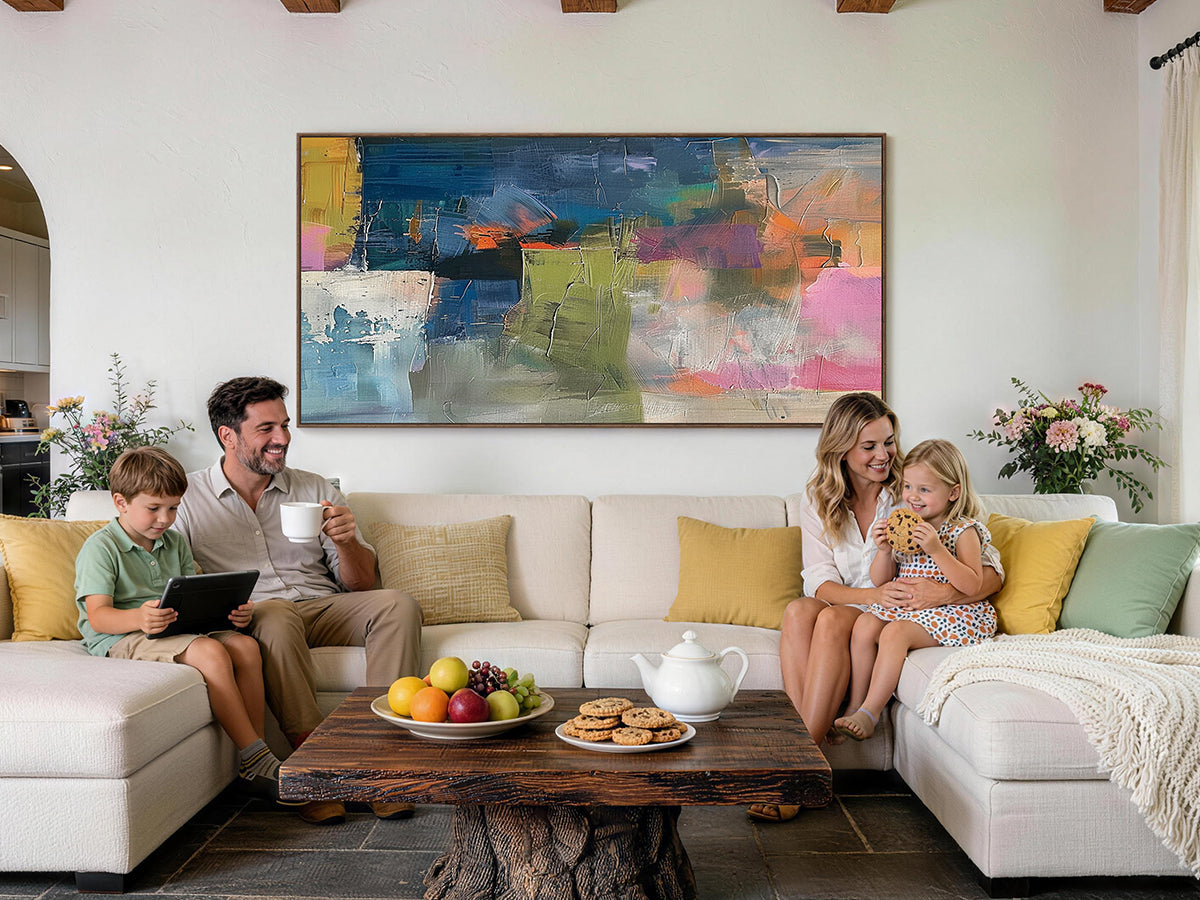
Have you ever walked into a room and instantly felt calm — or energized? That's the power of intentional design. The right artwork doesn't just decorate a space; it actively shapes how you feel in it.
Wellness-driven décor is booming for exactly this reason. McKinsey's 2025 report identifies "appearance and aesthetics" as a top growth area in the $2T wellness market, and APA research reveals that 65% of people believe thoughtfully designed living spaces improve mental health. This guide introduces the aura aesthetic — a design philosophy built around harmony, emotional upliftment, and spaces that genuinely support well-being.
What Is Aura Aesthetic?
Aura aesthetic is interior design with mood-regulating intent. It's about curating an environment that reflects your personality while promoting calm and focus — not just looking good.
This style is closely related to the Japandi trend, a fusion of Japanese minimalism and Scandinavian design. It favors clean lines, natural materials (wood, stone, linen), uncluttered layouts, and warm simplicity. Light and materials are allowed to speak for themselves.
Color is central. Cooler monochromatic or analogous palettes — soft blues, greens, and neutrals — support relaxation and reduce anxiety. Organic shapes, matte textures, and natural fabrics complete the picture. The goal: a space that feels deeply soothing, not just styled.
The Power of Textured Art: A Tactile Experience
One of the most underrated tools in aura aesthetic is contemporary textured art. Thick impasto paint, layered plaster, and carved relief don't just look interesting — they engage the brain differently.
Neuroscience shows that viewing textures activates the somatosensory cortex, deepening our sensory experience beyond the purely visual. More importantly, contact with natural textures has measurable physiological effects: in clinical trials, briefly touching wood caused a significant drop in cortisol, the primary stress hormone.
Textured canvases and sculptures make art active rather than passive. Feeling grooves or brushstroke ridges turns wall art into a meditative touchpoint — something you return to, not just glance at. A 3D Heavy Impasto Canvas, for example, creates tactile energy that enhances the sensory atmosphere of any room.
Calming Bedroom Art: Color Psychology for Rest
Your bedroom is your sanctuary. The art you choose there should support rest — not compete with it.
Color psychology is clear on this:
· Blue lowers blood pressure, heart rate, and stress hormones. It encourages sleepiness and calm focus.
· Green adds a sense of renewal and freshness without overstimulation.
· Soft lavender, sage, warm gray, and dusty neutrals create a restful vibe that promotes relaxation.
Avoid bright reds, oranges, or high-contrast clashing hues in sleeping areas. These raise adrenaline and alertness — the opposite of what a bedroom needs. Cool color schemes activate the parasympathetic nervous system (rest and digest), while warm, intense hues trigger the sympathetic (stress) response.
Pair calming artwork with natural daylight, sheer curtains, and wooden frames for maximum effect. The synergy of color, texture, and soft light creates a genuinely restorative environment.
Wabi-Sabi Wall Art: Finding Peace in Imperfection
Wabi-sabi is the Japanese worldview that finds beauty in imperfection and impermanence. In art, this means visible brushstrokes, uneven glazes, raw edges, and asymmetry — pieces that look lived-in rather than manufactured.
The psychological benefit is real. Accepting natural imperfection relieves the pressure of perfection, which psychology links directly to reduced anxiety. A hand-formed sculpture or a painting with irregular texture subliminally reminds you to relax into life's natural flow.
In minimalist spaces, wabi-sabi art becomes a warm focal point. Subtle irregularities — worn plaster finishes, uneven wood grain, organic color variation — create a grounding, mindful atmosphere. These pieces work especially well in living rooms and bedrooms, spaces where you unwind and recharge.
Productivity-Boosting Office Decor: Minimalism That Sharpens Focus
Visual clutter has a direct cost to productivity. Research shows workers in cluttered spaces have lower accuracy and motivation — the brain uses extra cognitive resources filtering distractions, leaving less for actual work.
High-contrast minimalist art solves this elegantly. Black-and-white geometric canvases or clean 3D focal forms engage attention without overload. The brain processes bold, simple shapes more efficiently than busy patterns — a single striking image on an uncluttered wall becomes a mental anchor rather than a distraction.
White-on-white relief art or single sculpted forms in neutral tones add tactile dimension without visual noise. The result: a workspace accent that improves alertness and concentration while reinforcing a clean, focused aesthetic.
Biophilic Wall Art: Bringing Nature Indoors
Biophilic design connects interiors to the natural world — and the well-being benefits are well-documented. People exposed to biophilic indoor spaces recover from stress significantly faster than those in plain environments, with the strongest calming effect in the first few minutes of exposure.
Authentic biophilic art uses real natural materials: handmade Washi paper (from mulberry bark), mineral pigments, and earth tones (ochres, umbers, plant dyes). These materials feel organic, avoid synthetic off-gassing, and keep indoor air healthier. Motifs like abstracted leaves, water patterns, or landscape hints reinforce the nature connection even in abstract compositions.
Sustainably made biophilic art — using natural pigments free of solvents and heavy metals — aligns with the 52% of homebuyers now prioritizing eco-friendly décor products.
The Philosophy of Ma: Letting Space Breathe
An original hand-painted canvas carries something a print cannot — the artist's direct energy, embedded in every brushstroke and imperfection. That authenticity makes the artwork feel alive.
In Japanese aesthetics, ma (間) is the conscious use of empty space. Absence is as meaningful as presence. When a canvas leaves areas of background visible, or isolates brushwork in open space, it draws the eye and invites contemplation. Strategically placed emptiness amplifies a painting's impact rather than diminishing it.
Applied to room design: give artwork generous breathing room. A large blank wall or wide mat around a piece allows the eye to rest and the art to command attention. The interplay between textured or colored areas and deliberate void is one of the most powerful — and most overlooked — tools in aura aesthetic.
How to Choose Art That Resonates: A Practical Guide
Step 1 — Define the mood. Decide how you want the room to feel: calm, energizing, or focused. Match art color and style accordingly (blues/greens for calm, bold contrasts for energy, organic motifs for grounding).
Step 2 — Consider scale. Measure your wall and furniture. Large art makes a statement in living areas; smaller pieces suit intimate nooks. Choose orientation (portrait vs. landscape) to balance the space visually.
Step 3 — Think about texture. Soft textured art suits lounges and bedrooms; sturdy 3D or relief work suits entryways and offices. Mixed media adds interest where lighting and depth allow.
Step 4 — Trust your reaction. Art that makes you pause, smile, or breathe differently is doing its job. Research confirms that people prefer items with personal meaning — and meaningful environments consistently support mental well-being.
Create Your Aura
Aura aesthetic isn't about following trends. It's about building an environment that actively supports how you want to feel — calm, focused, grounded, or restored.
Whether you're drawn to the tranquility of wabi-sabi imperfection, the sensory depth of impasto texture, the focus-sharpening clarity of minimalism, or the restorative quality of biophilic design, the principle is the same: intentional art transforms a space from decorated to genuinely alive.
Start with one wall. Choose one piece that resonates. Let the aura build from there.
Choose the suitable Wall art for your home
Wabi-Sabi Art → Perfect for those who appreciate imperfection and natural beauty. Earthy tones, organic textures, and minimalist Japanese aesthetics create serene, meditative spaces. Ideal for calm, grounded personalities.
General Abstract → Bold brushstrokes, vibrant color blocks, and expressive compositions suit creative spirits who want to make a statement. These pieces energize spaces and spark conversation—perfect for dynamic, artistic personalities.
3D Texture Art → Adds dimensional depth and tactile interest to walls. Raised surfaces, layered materials, and sculptural elements create visual intrigue from multiple angles. Ideal for design enthusiasts who value unique, museum-quality pieces.
Minimalist Art → Clean lines, subtle palettes, and negative space appeal to those who embrace "less is more" philosophy. Simple yet sophisticated, these pieces create breathing room in modern living spaces.
Share:
Where to Find Authentic Wabi-Sabi Paintings & Prints: A Curator’s Guide
How to Size a Large Abstract Painting for Your Wall