


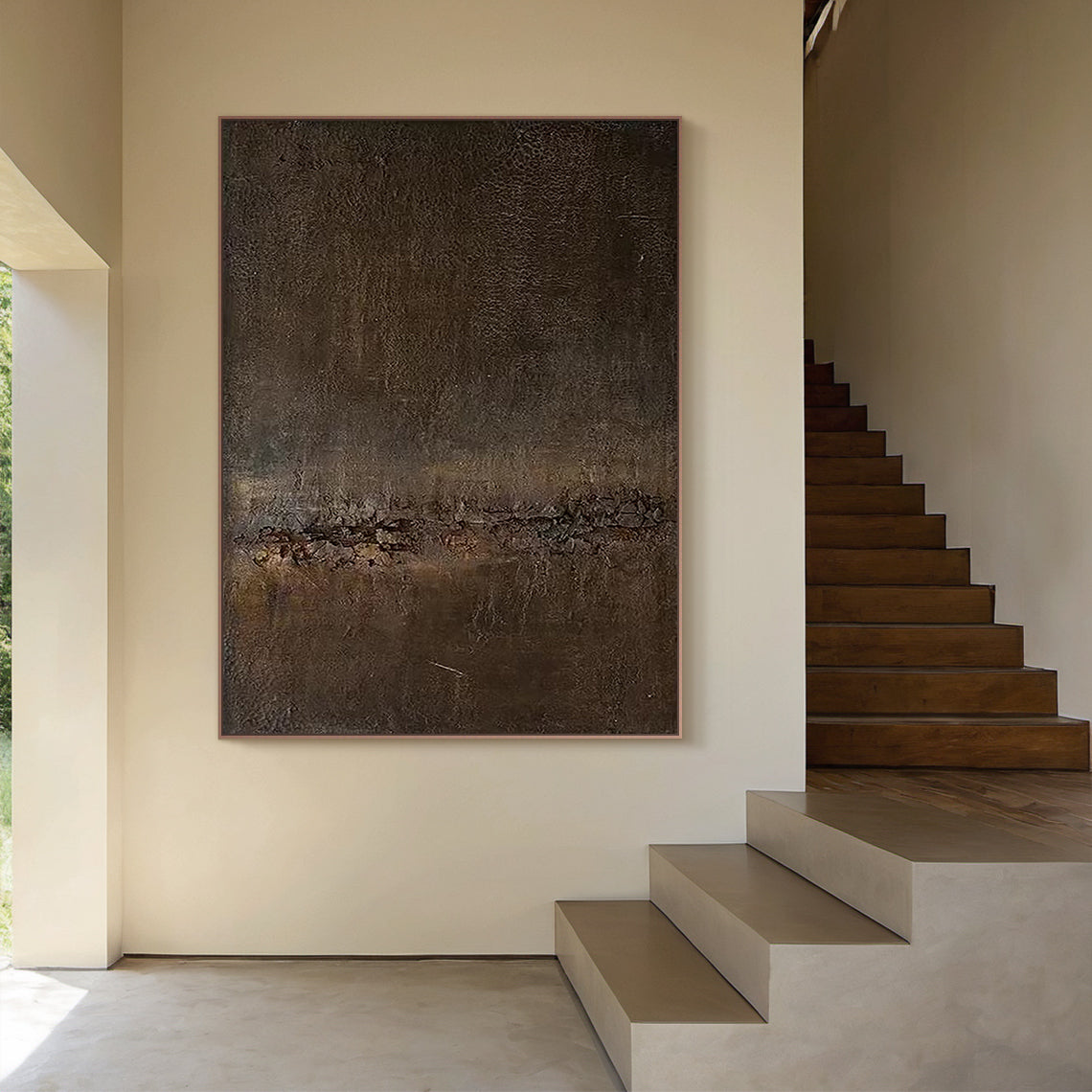
I remember wandering through Kyoto years ago, stumbling upon a tiny tea room tucked away in a quiet alley. The walls were subtly imperfect, the pottery clearly handmade, and the whole atmosphere breathed calm acceptance. That moment crystallized what authentic Wabi-Sabi art truly means — and why so much of what gets labeled “Wabi-Sabi” today misses the mark entirely.
According to Ideal Home and Homes & Gardens, Japandi and Wabi-Sabi remain the dominant décor trends. But trend status is exactly the problem. The philosophy deserves more than a hashtag. This guide will help you source art that doesn’t just fill a space — it transforms how you experience it.
Quick answer: Authentic Wabi-Sabi art is defined by imperfection, impermanence, and incompleteness — rooted in Zen Buddhism aesthetics and the 15th-century Japanese tea ceremony. Look for handmade paper, natural pigments, asymmetric compositions, and visible signs of process. As the philosophy reminds us: true Wabi-Sabi art is never merely a decor style — it is a form of visual meditation.

What Makes Authentic Wabi-Sabi Art? Understanding the Philosophy
Wabi-Sabi’s roots lie in 15th-century Japan, growing out of Zen Buddhism aesthetic traditions and tea ceremony rituals. Its core principles — imperfection, impermanence, and incompleteness — are not decorative concepts but ways of seeing the world. The Japanese term “Ma” (negative space) is central: what is absent matters as much as what is present.
True Wabi-Sabi minimalism is characterized by asymmetry, roughness, modesty, and intimacy. Think of a tea bowl made from simple clay, its glaze slightly uneven. Think of brushstrokes that capture an essence rather than a perfect likeness. These qualities cannot be manufactured at scale — which is precisely why mass-produced “distressed” prints fail the test of authenticity.
Transience is another pillar. Authentic Wabi-Sabi wall art for living rooms should evoke a sense that beauty is fleeting — a quality found in weathered wood, faded ink, and the natural aging of organic materials.

Where to Buy Original Wabi-Sabi Paintings: Three Sourcing Tiers
A. Independent Artist Platforms (Best for Originality)
Platforms like Etsy, Saatchi Art, and Behance are excellent starting points for finding handmade Wabi-Sabi paper art and one-of-a-kind textured minimalist canvas art. When searching, use specific terms: “handmade Japanese ink wash paintings,” “washi paper collage,” or “textured abstract minimalist art.” Filter for independent artists rather than print shops. Read artist statements — a genuine understanding of Zen Buddhism aesthetic will come through in how they describe their process.
B. Specialist Galleries & Japanese Art Dealers (Best for Authenticity)
For Sumi-e ink wash paintings and serious original works, specialist galleries like Ronin Gallery or dedicated Sumi-e dealers offer both provenance and context. These sources provide artist biographies, detailed material descriptions, and often the cultural backstory behind each piece — essential when investing in authentic Wabi-Sabi art. AurafyArt takes a similar curatorial approach, focusing on original, handcrafted works with natural materials, enhanced photography in multiple lighting conditions, and transparent artist bios.
C. Curated Print Retailers (Best for Affordable Wabi-Sabi Art Prints Online)
You don’t need to drain your budget to embrace this aesthetic. Affordable Wabi-Sabi art prints online can work beautifully if you prioritize quality reproduction. Look specifically for giclée prints — high-resolution inkjet reproductions on canvas or archival paper using pigment-based inks. These preserve the tonal subtleties of original ink wash and textured works far better than standard digital prints. Retailers specializing in Japanese minimalist prints or Japandi style décor are your best bet here.

How to Identify Authentic Wabi-Sabi Art: Expert Checklist
Before purchasing, evaluate any piece against these criteria:
• Materials: Does the work use handmade paper (Washi), natural pigments, linen, clay-based textures, or unprocessed fibers? Synthetic substitutes undermine the philosophy.
• Ma (Negative Space): Is the composition generous with empty space? Wabi-Sabi minimalism is defined by what is left out as much as what is included.
• Imperfection: Are there natural ink bleeds, asymmetric lines, rough paper edges, or uneven textures? These are features, not flaws.
• Transience: Does the piece evoke impermanence — perhaps through fading tones, soft gradients, or the suggestion of something fleeting?
• Handmade origin: Is there an artist statement, process description, or visible evidence of handwork? Mass production is incompatible with authentic Wabi-Sabi art.
Types of Wabi-Sabi Art to Look For
Understanding the main styles will sharpen your eye when sourcing:
|
Sumi-e Ink Wash Paintings: The Art of Presence and Absence
Sumi-e is the purest expression of Zen Buddhism aesthetic in visual art. Artists use minimalist brushstrokes and negative space to capture the essence of a subject — a branch, a mountain, a wave — rather than its photographic likeness. Every mark is deliberate; every empty area is intentional. When sourcing Japanese minimalist prints, Sumi-e works are among the most authentic expressions of the philosophy you can find.
Textured Minimalist Canvas Art for Japandi Decor
Japandi — the fusion of Japanese and Scandinavian design — has made textured minimalist canvas art one of the most sought-after categories in contemporary interior design. These works merge sculpture with abstract painting, creating surfaces that reward close inspection. A textured piece in a Japandi-style room adds sensory depth that flat prints simply cannot achieve. Look for works where the texture feels organic and unplanned rather than mechanically applied.

Integrating Wabi-Sabi Wall Art into Your Living Room: Design Tips
Once you’ve found the right piece, placement matters as much as the art itself:
• Honor the Ma: Let the art breathe. In a minimalist living room, a single large Wabi-Sabi painting with generous wall space around it is far more impactful than a crowded gallery wall.
• Pair with natural materials: Position Wabi-Sabi wall art for living rooms alongside live plants, woven linen, stone floors, or raw wood furniture. The art and the environment should feel continuous.
• Light thoughtfully: Avoid direct harsh lighting. Soft, diffused natural light best reveals the texture and tonal depth of ink wash paintings and textured canvas works.
Caring for Wabi-Sabi Art: Embracing the Aging Process
A hands-off approach generally serves authentic Wabi-Sabi art best. Maintain a stable environment — ideally around 20°C (68°F) and 45–55% humidity. UV exposure fades pigments and yellows organic paper; dampness encourages mold on handmade paper and warps wood.
Crucially, resist the impulse to repair. A tiny chip in a ceramic glaze print, a slight yellowing of washi paper, a hairline variation in a brushstroke — these are evidence of transience, not damage. They are the art aging into itself, and in Wabi-Sabi philosophy, they only deepen its meaning.
FAQ
What defines authentic Wabi-Sabi art?
Authentic Wabi-Sabi art embodies imperfection, impermanence, and incompleteness through handmade processes and natural materials. It is rooted in Zen Buddhism aesthetics and the 15th-century Japanese tea ceremony tradition. The defining quality is that its beauty arises from honest, unpolished making — not from stylized imitation of imperfection.
Where can I buy affordable Wabi-Sabi art prints online?
Etsy, Saatchi Art, and specialist galleries like AurafyArt offer a range of price points. For budget-friendly options, prioritize giclée prints on archival paper over standard digital prints. Search specifically for “Japanese minimalist prints” or “Sumi-e ink wash paintings” to find works with genuine aesthetic grounding.
What is the difference between Wabi-Sabi and Japandi style?
Wabi-Sabi is a philosophical and aesthetic framework originating in Japan. Japandi style is an interior design trend that blends Japanese minimalism with Scandinavian functionalism. Wabi-Sabi informs the soul of Japandi — the acceptance of imperfection, the use of natural materials, the restraint of ornamentation. Textured minimalist canvas art for Japandi decor often draws directly on Wabi-Sabi principles.
Ready to Find Your Piece?
Authentic Wabi-Sabi art is more than a visual trend — it is an invitation to see beauty in what is honest, imperfect, and passing. Whether you’re drawn to Sumi-e ink wash paintings, handmade Wabi-Sabi paper art, or textured minimalist canvas art for a Japandi-style space, the right piece will not just decorate a room. It will change how you inhabit it.
Not sure if a piece suits your space? Describe the texture, tone, and composition you’re drawn to — or share a photo — and we can help you identify the key visual elements to look for in a high-quality Wabi-Sabi print.
Share:
2026 Home Decor Trends: Why an Original Wall Art Piece Remains the Heart of Your Living Room
Defining Aura Aesthetic: How to Use Mood-Boosting Art in Modern Homes