


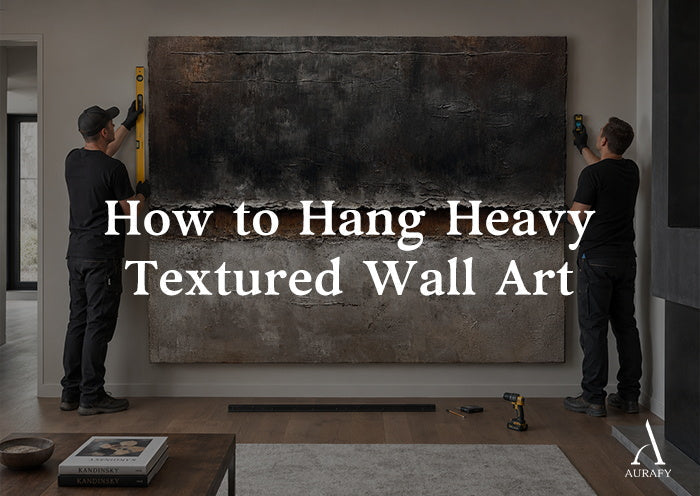
How to Hang Heavy Textured Wall Art

How Do You Safely Hang Heavy Textured Art?

If you are learning how to hang heavy textured wall art, start by choosing mounting hardware based on your wall type, artwork weight, and support structure.
The most reliable approach is usually:
use mechanical anchors rather than adhesive strips
distribute weight across multiple mounting points
match hardware to drywall, studs, brick, or concrete
confirm the artwork is level after installation
Large textured artwork can weigh significantly more than standard canvas prints because of added surface materials and framing.
Always check the artwork’s actual weight and follow the hardware manufacturer’s load ratings before installation.
Heavy Wall Art Hardware Guide by Wall Type

|
Wall Type |
Common Mounting Options |
Important Considerations |
|
Drywall without a stud |
Toggle bolts or rated drywall anchors |
Use hardware specifically rated for the artwork weight |
|
Drywall with a stud |
Screws installed into the stud |
Stud location provides stronger support |
|
Brick or concrete |
Masonry anchors and appropriate screws |
Requires suitable drilling tools |
|
Large oversized artwork |
French cleat system or professional mounting solutions |
Spreads weight across a wider area |
The exact capacity depends on:
hardware brand and model
wall condition
installation quality
artwork construction
Never rely only on general weight estimates. For drywall installations, use drywall anchors that are specifically rated for the artwork weight and compatible with the wall condition.
Why Heavy Textured Art Needs Different Hanging Methods
A small flat print places relatively little stress on the wall.
A large textured artwork can create additional challenges because it may involve heavier materials and deeper relief. The same principles apply when considering how to hang plaster wall art, where rigid textured surfaces need stable support and careful handling.
heavier surface materials
deeper relief
thicker support structures
larger overall dimensions
The goal is not simply to hang the artwork.
The goal is to keep it:
secure
level
stable over time
D-Rings vs. Single Wire Hanging
Why Single Wire Can Be Less Suitable
A traditional wire system uses one central hanging point.
For lightweight artwork, this can work well.
For heavier textured pieces, a single point may allow:
more movement
greater tilt risk
uneven pressure on the frame
Advantages of Two-Point Hanging
Two D-rings or similar mounting points distribute the load across two locations.
Benefits include:
improved stability
easier leveling
reduced movement after installation
The correct method still depends on the artwork’s frame construction and weight.
Canvas Hanging Guide: Step-by-Step Installation

Step 1: Confirm the Artwork Weight
Before choosing hardware:
check the artwork specifications
include frame weight if applicable
confirm the wall material
Do not select anchors based only on artwork size.
Step 2: Find the Installation Position
Measure:
wall center
desired artwork height
relationship with nearby furniture
Consider viewing distance and room proportions.
Step 3: Mark Mounting Points
Measure the distance between the artwork’s hanging points.
Transfer those measurements to the wall using:
a level
painter’s tape
careful marking
Ensure both points align horizontally.
Step 4: Install Appropriate Hardware
Choose hardware according to:
wall construction
artwork weight
manufacturer recommendations
Avoid using a stronger-looking anchor without confirming compatibility with the wall. When comparing the best anchors for heavy canvas, rely on verified load ratings and wall-type compatibility rather than appearance alone.
Step 5: Hang and Check Alignment
For larger artwork:
use two people when lifting if needed
place the artwork carefully
check the final level position
Avoid pressing directly against delicate textured surfaces during installation.
French Cleats: When They Make Sense
A French cleat is a two-part mounting system:
one section attaches to the wall
one section attaches to the artwork
The two pieces interlock to support the artwork.
French cleats can be useful for:
larger pieces
heavier artwork
situations where weight distribution matters
They are not required for every canvas, but they can provide additional stability when properly installed.
Why Adhesive Hooks Are Usually Not Suitable
Adhesive hanging products are designed for specific weight ranges and surface conditions.
They are generally not recommended for heavy textured artwork because:
the artwork weight may exceed their rating
wall conditions affect performance
textured pieces can create additional stress
Mechanical mounting methods are usually more appropriate for heavier pieces.
Installation Safety Limits
DIY installation may be reasonable for smaller artworks when the correct hardware and wall conditions are known.
For very large or heavy pieces, consider professional art installation, especially when:
drilling into masonry
installing oversized artwork
working with unfamiliar wall structures
A secure installation protects both the artwork and the surrounding space.
Frequently Asked Questions
Can I use adhesive strips for heavy textured wall art?
They are generally not recommended for heavy or dimensional artwork. Use mounting hardware designed for the artwork’s weight and wall type.
How do I hang heavy art without finding a stud?
If you need to hang large art on drywall without a stud, use properly rated anchors designed for drywall or a mounting system that distributes weight across a wider area.
What is a French cleat for wall art?
A French cleat is an interlocking mounting system that attaches partly to the wall and partly to the artwork. It helps distribute weight and is often considered for larger pieces.
How many people should install large textured artwork?
The number depends on the artwork size, weight, and installation location. Larger pieces often require more than one person for safe handling.
Should I install hardware before receiving the artwork?
It is better to confirm the artwork’s actual weight and mounting requirements first. Different frames and materials may require different hardware.
Need Installation Guidance?

Proper art installation is part of protecting your investment in textured artwork, especially for larger or high-relief pieces.
Before purchasing hardware, confirm your artwork dimensions, weight, and wall type.
Contact the studio for artwork-specific installation guidance or request a mounting recommendation based on your wall conditions.
Click here to get the installation video.
Share:
Framed vs Unframed Canvas Guide
Wabi-Sabi Entryway Art Guide