


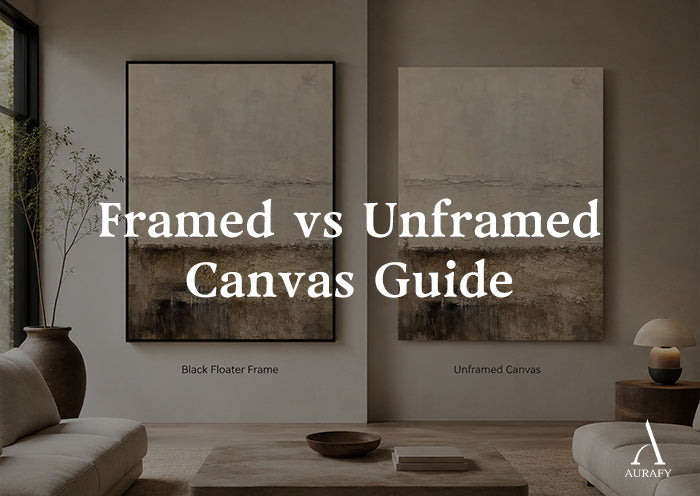
Framed vs Unframed Canvas Guide

Should You Choose Framed or Unframed Art?

Choosing between framed and unframed canvas art depends on three main factors: When comparing framed vs unframed canvas, the best choice depends on artwork material, interior style, and practical installation needs.
the artwork material and weight
your interior style
shipping and installation considerations
A frameless gallery wrap creates a clean, modern appearance and allows the artwork surface to remain the main focus. This type of presentation is often preferred when considering a minimalist gallery wrap style.
A floating frame adds a more structured presentation and can provide additional support for thicker or heavier textured pieces. Professional canvas framing can enhance dimensional artwork while adding structural support.
A rolled canvas reduces shipping volume but requires stretching or framing after arrival and is only suitable for flexible materials. Buyers choosing rolled canvas should understand that the artwork may require local stretching or framing after delivery.
For genuine high-relief mineral artwork, framing and shipping choices require more consideration because the surface structure cannot be treated like a standard flat canvas. Questions such as should wabi sabi art be framed depend on the artwork texture, weight, and installation environment.
Framing Options Compared

|
Framing Option |
Visual Style |
Shipping Considerations |
Best For |
|
Frameless gallery wrap |
Minimal, continuous, modern |
Requires careful protection depending on size and material |
Contemporary interiors and artwork where the texture continues around the edges |
|
Floating frame |
Structured, finished, gallery-inspired |
Adds weight and usually requires stronger packaging |
Thick textured artwork and interiors needing a defined frame element |
|
Rolled canvas |
Flexible and practical |
Lower shipping volume, but requires local finishing |
Flexible canvas artwork that can safely be rolled |
Frameless Gallery Wrap: Clean and Minimal
A gallery wrap means the canvas is stretched around a supporting frame, allowing the artwork to continue visually around the edges.
This style works well when you want:
a simple modern appearance
the artwork texture to remain uninterrupted
a lightweight visual effect
For textured pieces, the suitability depends on the material.
Flexible texture mediums may work well with this format, while rigid mineral relief surfaces may require additional support.
Floating Frames: Structure for Textured Artwork
A floating frame creates a small visible space between the artwork edge and the outer frame. This framing method is useful when comparing framed vs frameless textured art because it highlights depth and surface details.
This design can:
separate the artwork from the wall
emphasize the depth of the surface
create a more finished architectural appearance
For heavier textured artwork, a properly constructed frame can also provide additional structural support.
However, the ideal framing method depends on:
artwork thickness
support structure
total weight
installation method
A floating frame is not automatically required for every textured artwork, but it is often considered for larger dimensional pieces.
Rolled Canvas: When It Works and When It Does Not
Rolled shipping can reduce transportation volume, but it is not suitable for every artwork type.
Suitable for Flexible Materials
Rolled shipping may work for:
untextured canvas
some flexible acrylic-based textured surfaces
The artwork should be rolled only if the material manufacturer or studio confirms that the surface can tolerate it.
Not Suitable for Rigid Mineral Relief
High-relief mineral plaster artwork cannot simply be rolled.
The rigid raised surface may crack or break when bent.
For these pieces, safer options usually include:
shipping flat
protective packaging
reinforced crates when appropriate
How to Handle a Rolled Canvas After Delivery

Step 1: Unpack Carefully
Allow the artwork to return to its natural shape gradually.
Avoid forcing the canvas flat if it shows resistance.
Step 2: Choose a Local Framer
A professional framer can: If you need guidance on how to frame rolled canvas, a professional framer can help select suitable support bars and finishing options.
stretch the canvas
select suitable support bars
recommend additional framing options
This approach is often practical for international buyers purchasing flexible artwork.
Step 3: Decide on Final Presentation
After stretching, you can choose:
gallery wrap presentation
external frame
custom framing that matches your interior
The right choice depends on both the artwork and the room.
How to Choose the Right Option for Your Interior
Modern Minimalist Spaces
A frameless gallery wrap often works well when you want:
clean lines
uninterrupted texture
a quieter appearance
Japandi and Natural Interiors
A simple wood floating frame can complement:
natural materials
warm neutral palettes
textured surfaces
Large Statement Artwork
For oversized pieces, consider:
structural support
wall installation requirements
transportation limitations
Large artwork decisions should balance appearance with practicality.
Frequently Asked Questions
Can heavily textured plaster art be shipped as a rolled canvas?
Usually no. Rigid mineral plaster or high-relief surfaces cannot be rolled safely because bending can damage the raised structure. Rolled shipping is generally limited to flexible materials.
What is a gallery wrap for textured artwork?
A gallery wrap stretches the canvas around a supporting frame so the artwork continues around the edges without a separate outer frame.
Do floating frames use glass?
Usually not for dimensional artwork. Covering raised texture with glass or acrylic can interfere with the visual depth and surface character of the piece.
Is framed art better than unframed art?
Neither option is always better. The choice depends on the artwork material, room style, installation needs, and personal preference.
Can I add a frame later?
For many canvas artworks, yes. However, the ability to add framing later depends on the artwork construction and thickness.
Choose the Right Framing Style

The best framing choice should protect the artwork while supporting the design of your space.
Explore framed and unframed textured artwork options, or contact a studio with your wall dimensions and interior style to discuss the most suitable presentation.
Share:
Wabi-Sabi Wall Art Pricing Guide
How to Hang Heavy Textured Wall Art