


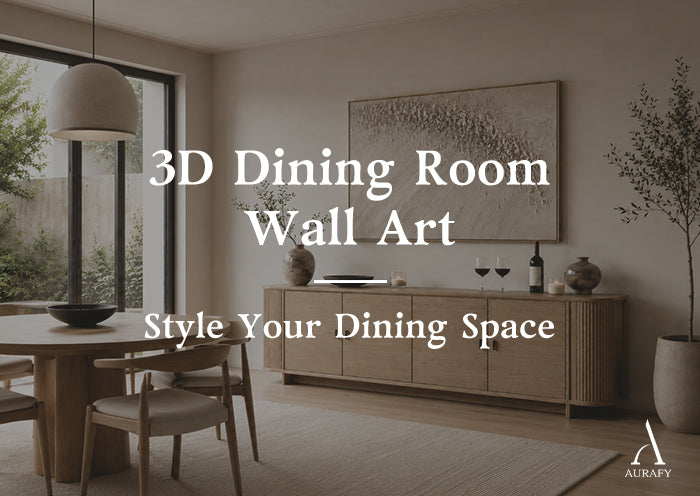
- Hang 3D dining room wall art near your dining setup to turn a functional dining zone into a warm, inviting social space.
- Use soft, earth-toned abstract textures to create a relaxed dining atmosphere that encourages conversation and comfort.
- Try a diptych or triptych arrangement for dining room textured wall art — it visually balances a long table or a wide buffet sideboard.

The kitchen and dining area are the emotional heart of a home. People gather there to cook, eat, talk, and unwind. The space deserves to reflect that.
Most kitchens and dining rooms do not. Marble countertops, stainless steel appliances, ceramic tiles — the materials that dominate these spaces are functional and durable, but they are also cold. They create an environment that feels more like a showroom than a place to linger.
3D dining room wall art changes that balance. A handmade textured piece brings organic warmth to a space full of hard surfaces. It adds visual depth without taking up counter space. And it does something a food poster or a framed print cannot — it gives the eye a genuinely three-dimensional surface to rest on, which makes the room feel more complete and more considered.
Why 3D Wall Painting Transforms a Kitchen or Dining Room

The case for 3D wall painting for home use in kitchen and dining spaces comes down to one practical reality: these rooms need warmth more than almost any other space in the home, and they are typically the least warm-looking rooms in the house.
It softens hard surfaces.
Open-plan kitchens and dining areas combine marble, steel, glass, and ceramic tile. Each of these materials is reflective and visually cool. One handmade 3D piece with an earthy, organic texture immediately softens this combination. The matte, irregular surface absorbs light rather than bouncing it back. It introduces a natural, human-made quality that hard architectural materials cannot provide on their own.
It creates a focal point without taking up space.
Whether it hangs above a kitchen island, along a dining room side wall, or above a buffet cabinet, a textured 3D piece draws the eye without occupying floor or counter space. The physical depth of the surface creates visual interest that a flat print cannot match — particularly in a room where you spend significant time seated, with plenty of opportunity to notice the walls around you.
It works with the lighting conditions.
Dining rooms typically have warm, angled light from pendants and wall sconces. This is exactly the kind of light that brings out the best in a 3D textured surface. The shadows deepen, the ridges catch the warmth of the bulb, and the piece shifts and changes as the evening progresses. A handmade textured work in a dining room is genuinely different at a candlelit dinner than it is at a bright Sunday brunch — and that responsiveness to light is part of what makes it worth having.
Dining Room Textured Wall Art Ideas: Two Arrangements That Work
These two approaches cover the most common dining room configurations. Both are practical and visually effective.
Arrangement one: the diptych or triptych along a long wall

This approach suits rectangular dining rooms with a 6 or 8 seat table running parallel to a long wall.
Choose two or three vertical textured canvases in matching or complementary compositions. Hang them in a horizontal row at consistent eye level, with a gap of 2 to 4 inches between each panel. Keep the sizing identical across the set.
This arrangement does two things well. First, it fills a long wall in a way that feels deliberate and gallery-like rather than sparse. Second, the horizontal spread of the arrangement echoes the length of the dining table below it, creating a visual connection between the furniture and the art that makes the room feel designed rather than assembled.
For a dining room where the table seats six, a three-panel arrangement with each canvas measuring 20 × 30 inches gives a total arrangement width of around 64 inches — wide enough to hold the wall, contained enough to leave breathing space on either side.
Arrangement two: single statement piece above a buffet sideboard

This is the most classic dining room placement — and one of the most effective for 3D textured work.
Hang a single large-format piece 8 to 10 inches above the top of the sideboard. Choose a piece with soft, flowing lines or an organic curved composition rather than sharp geometric forms. The rounded, undulating texture complements the linear quality of the furniture below it and creates a layered visual relationship between the two.
The physical depth of the 3D piece adds something a flat print cannot in this position: it gives the objects displayed on the sideboard — wine glasses, ceramics, candles — a backdrop with genuine visual weight. The sideboard vignette reads as a curated composition rather than just a collection of objects.
For a standard 60-inch sideboard, a canvas between 40 and 48 inches wide sits in the right proportion — wide enough to anchor the furniture, contained enough to let the sideboard breathe beneath it.
Built Without Shortcuts: Made-to-Order Quality for Your Dining Space
The dining area places a specific set of demands on the objects in it. People are close to the walls. They look at them for extended periods. They notice quality — and they notice the lack of it.
Mass-produced 3D panels pressed from molds do not hold up to this scrutiny. The surface repeats. The finish is inconsistent. Under the warm, angled light of a dining room pendant, the lack of genuine surface variation becomes visible. The piece reads as decorative in the least compelling sense of the word.
AurafyArt builds every piece to order. We hold no inventory. When your order arrives, an artist begins your piece from scratch — mixing the modeling paste by hand, applying it with palette knives in real time, and building the surface layer by layer until the composition has the depth and movement the piece requires.
Every finished surface receives a hand-applied coat of low-VOC protective varnish. This seal protects against dust, minor moisture, and the gradual surface wear that comes from a room in regular, active use.
The materials are chosen with indoor residential environments in mind. The paste and varnish are both low-VOC once cured — relevant in a room where you prepare and eat food and where air quality matters.
What arrives is a piece built with the same attention to detail that goes into the rest of your dining room. It holds up to close inspection. It performs under warm light. And it exists nowhere else.
Dining Room Lighting: How to Show 3D Art at Its Best

Dining rooms present a specific lighting challenge for wall art. The main pendant or chandelier above the table is designed to illuminate the table surface — not the walls. It typically hangs low and directs most of its light downward. If a 3D piece hangs in the direct beam of a strong pendant, the frontal light fills in the surface shadows and flattens the dimensional effect.
The solution is a separate, dedicated light source for the art.
Use a wall-mounted or ceiling-track spotlight.
Install an adjustable track head or a picture light that directs warm light across the wall surface from the side or above at an angle. Aim it so the light rakes across the textured surface rather than hitting it straight on. This raking light creates the shadow contrast that makes 3D work visually compelling — and in a dining room, that warm shadow falling across the textured surface adds to the overall atmosphere of the room, not just to the appearance of the piece itself.
Use bulbs in the 2700K to 3000K range. This warm white temperature is consistent with the ambient tone of most dining rooms and enhances the earthy, organic quality of neutral textured pieces.
Avoid strong overhead ambient light directly above the piece.
If the only available light source is a ceiling fixture positioned directly above the art, add a picture light mounted above the canvas and angled downward toward the surface. This creates a more controlled, directional light on the piece and reduces the flat, shadow-free illumination that overhead light produces.
Frequently Asked Questions
Does 3D textured art attract grease and dust in a kitchen environment?
All AurafyArt pieces are finished with a protective varnish coat that seals the surface against dust and minor airborne residue. In a well-ventilated kitchen — where a range hood handles cooking emissions — the art will not accumulate grease noticeably. For general maintenance, use a soft dry brush every few weeks to sweep dust from the surface ridges. For any light marks, press gently with a barely damp microfiber cloth and allow to air dry. Avoid spray cleaners or anything containing alcohol or solvents, which can break down the varnish over time.
What size works above a standard dining table?
For a rectangular dining table seating four to six people — typically 60 to 72 inches long — a single piece between 36 and 48 inches wide works well on the adjacent wall. If you use a diptych, a total arrangement width of 48 to 60 inches is appropriate. For a round dining table, a single square or circular-format piece above the sideboard or on the feature wall reads better than a long horizontal arrangement.
Can I hang 3D wall art in an open-plan kitchen with no dedicated dining wall?
Yes. In an open-plan space, position the piece on the wall most visible from the dining area — typically the wall behind a kitchen island or the wall at the end of a peninsula. This placement connects the cooking and dining zones visually and gives the overall space a clear focal point. Choose a neutral tone that works with both the kitchen materials and the dining furniture, since the piece will be visible from both areas simultaneously.
The Dining Room Deserves More Than a Food Poster
The best dining experiences happen in rooms that feel warm, considered, and complete. The food matters. The company matters. And the environment — the surfaces, the light, the objects in the room — matters more than most people realize until they experience the difference.
3D kitchen wall art is one of the most effective changes you can make to a dining space. It adds genuine warmth to a room full of hard surfaces. It performs beautifully under the kind of warm, angled light that dining rooms are already designed to have. And it gives the room a focal point that stays interesting meal after meal, season after season.
Your dining table deserves a wall that is worth looking at.
Share:
3D Hallway Art: Transform Narrow Spaces with Texture
Vintage 3D Wall Art: Mixing Old and New with Confidence