


Key Takeaways
· 3D textured wall art builds depth through physical material — not color — setting it apart from any print or reproduction.
· Every handmade impasto piece is unique. Each palette knife stroke creates a shadow pattern that shifts with the light throughout the day.
· Wabi-sabi and Japandi interiors pair naturally with 3D textured abstract art — both share the same love of raw, organic surfaces.
· Angled spotlights or raking natural sidelight bring out the full depth of a textured surface. Flat overhead light does not.
You stare at a bare wall. No paint color, no gallery poster, no framed print quite fills it. The wall stays flat. Empty. Forgettable.
3D textured wall art solves exactly that problem. In 2026, it has become one of the most searched categories in home decor — and for good reason. It does things flat art simply cannot.
Home design is moving away from visual clutter. Spaces are becoming more intentional, more sensory. Textured, tactile surfaces have followed that shift — from niche artisan craft to mainstream must-have.
This guide explains what 3D textured wall art is, how artists make it, where it works best, and how to light it properly.
What Is 3D Textured Wall Art?

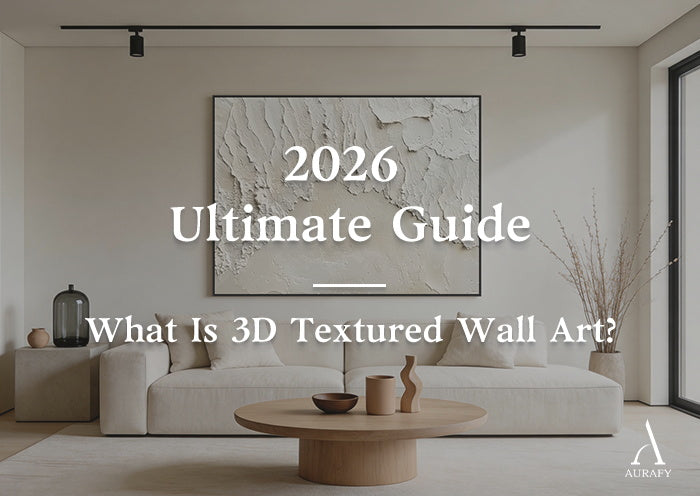
3D textured wall art is original artwork where physical material — sculpting paste, modeling compound, or mixed media — is built up on canvas or panel to create real surface relief. You experience it through shadow and dimension, not just color. It sits somewhere between a traditional painting and a low-relief sculpture.
This is what separates it from every flat print: the visual effect changes throughout the day. As light shifts, new shadows fall across the ridges and valleys of the surface. A quiet, near-monochromatic piece at noon can look bold and striking by early evening under an angled lamp. No print can do that.
"The surface is not the decoration. The surface is the painting itself — its weight, its wounds, its memory of the hand that made it."
The Quality a Machine Cannot Copy: Inside the Heavy Impasto Technique

Handmade 3D textured wall art is not a marketing phrase. It describes a slow, physical process that takes days and cannot be automated.
Knowing how artists make these pieces helps you understand what you are buying — and why the price reflects real craft.
1. Ground Preparation
The artist starts with a rigid support — usually a deep-profile gallery-wrap canvas or a birch panel — coated with multiple layers of professional gesso. This base carries the weight of the texture layers above without cracking or warping over time.
2. First Layer Application
Using palette knives of varying widths, the artist applies the first layer of acrylic texture medium. This thick paste holds peaks and ridges as it dries. This first pass sets the basic layout of the piece: where high points will catch light, where low areas will fall into shadow.
3. Building Up the Layers
Each new layer goes on only after the previous one has fully dried. A single work may need five to ten separate sessions over one to three weeks. This drying time is what keeps the piece from cracking — the main reason cheaper textured works fall apart within a year.
4. Adding Color
Color, if used at all, comes last. The artist applies thin, see-through washes that settle into the low areas and leave the high ridges lighter. The three-dimensional surface carries the expression — not the pigment.
5. Protective Finishing
A final coat of matte or satin varnish protects the surface from UV light and humidity, keeping the piece in good condition for decades under normal indoor use.
The result is an object with real physical presence.
Every ridge holds the mark of the tool that made it. No two strokes are the same, so no two handmade pieces are the same — even from the same artist working in the same series. That is the core value of handmade 3D textured wall art. Mass production cannot replicate it.
Why It Belongs in Wabi-Sabi & Minimalist Spaces
Pairing 3D abstract art with wabi-sabi and Japandi interiors is a natural fit — not just a trend.
These design styles share a core belief: beauty lives in imperfection, in honest materials, in the visible marks of how something was made. Textured wall art reflects that belief more directly than almost anything else you can hang on a wall.
Wabi-Sabi Wabi-sabi finds beauty in imperfection. The uneven ridges of an impasto surface — never symmetrical, never perfectly smooth — speak that language exactly. The piece shows how it was made, and that honesty is the point.
Japandi Japandi interiors rely on restraint: neutral colors, natural materials, and open space. A monochromatic textured work adds visual weight and tactile richness without adding color noise or busy pattern.
Modern Minimalism In a stripped-back room where every surface is smooth, a piece of wabi-sabi textured art adds the organic irregularity that stops the space from feeling cold or empty.
Transitional & Contemporary For rooms that mix classic architecture with modern furniture, textured art acts as a bridge — it references hand-crafted tradition while fitting fully within a modern visual style.
There is a deeper reason 3D abstract art works across all these contexts. It makes no demands on the viewer.
A landscape or portrait asks you to read it. An abstract textured work asks only that you feel it. In a room designed for rest and calm, that is not a weakness — it is the entire point.
How to Place, Scale, and Light Your Piece

The Light Rule
Lighting is the most overlooked — and most important — factor when living with textured wall art.
A piece hung under flat overhead light looks almost identical to a quality print. The same piece lit by a track spotlight at a 30-to-45-degree angle becomes a fully three-dimensional surface. Museums use this same method — called raking light — when they display sculptural reliefs.
Natural Sidelight (Best) A wall that receives angled morning or afternoon sun — not harsh midday glare — gives textured art a lively, changing quality throughout the day. A room with a window to one side works well.
Adjustable Track Spotlights (Most Controllable) A single adjustable track light positioned 30–45° from the wall gives consistent, dramatic results. Use warm white bulbs (2700K–3000K). They bring out the warm, earthy tones of textured art far better than cool daylight bulbs.
Picture Lights (Intimate Scale) For smaller works in a bedroom or hallway, a picture light mounted above and angled downward creates a focused, intentional pool of light. Hardwired or battery-powered both work well.
Choosing the Right Scale
Scale is the single decision most likely to make or break a piece in a given space. The general rule: go larger than feels comfortable. A 30 × 40 inch piece that looks bold in a showroom will often disappear on a living room wall behind a sofa.
Living Room & Feature Walls For sofa accent walls, choose a large single work (at least 40 inches on the longest side) or a diptych. You need enough visual weight to balance the furniture below. → View our living room sizing guide
Bedroom Above the headboard, choose works with soft, gentle texture rather than sharp peaks. The piece should support rest — not compete for attention. → Browse calming textured works for the bedroom
Entryway & Hallway Narrow spaces are ideal for textured art. Visitors pass close enough to see the surface in detail — an intimacy that a large open room rarely offers. One medium-format vertical piece anchors the space cleanly.
Tips: For details regarding the size of the hanging paintings, you can refer to this article.
[The Art of Scale: How to Choose the Right Wall Art Size for Any Space]
Frequently Asked Questions
Does 3D textured wall art collect dust? How do I clean it?
The raised ridges do collect light dust over time — similar to any carved or textured surface in your home. Cleaning is simple. Use a soft natural-bristle brush and sweep gently along the ridges every few weeks. Do not use water or liquid cleaners. Moisture can get into the texture material and cause small cracks. For tight areas, a can of compressed air removes debris without any contact. A properly sealed handmade piece needs no other maintenance for many years.
How long does it take to make a handmade piece?
Most handmade 3D textured pieces take 7 to 21 days to produce. Most of that time is drying time between layers — not active work hours. Adding a new layer before the previous one has dried is the main cause of cracking in lower-quality work. After the final layer, the varnish coat needs another 48–72 hours to cure before the piece is safe to pack and ship. This window is built into your delivery estimate. It is a sign of quality, not a delay.
Will the texture be damaged in shipping?
Rarely, with proper packaging. The acrylic texture material cures to a hardness similar to plaster — strong, not fragile. Each piece ships wrapped in acid-free tissue paper, cushioned with foam corner protectors, and boxed in double-walled cardboard. If a carrier causes damage, photograph it before fully unpacking, keep all packaging, and contact us. We will make it right.
What is the difference between 3D textured art and a regular oil painting?
A traditional oil painting builds up thin, even layers — often less than a millimeter thick in total. The experience is primarily about color and brushwork on a flat surface. 3D textured wall art builds the surface up several millimeters or more using thick pastes that hold their shape as they dry. The surface casts real shadows. Many pieces are near-monochromatic — the entire effect comes from light and shadow across a physical surface. That is what puts textured art closer to low-relief sculpture than to conventional painting.
A Smart Investment in How a Room Feels
Every decorating decision comes down to one question: how do you want to feel when you walk into the room?
3D textured wall art works on a level most decor cannot reach — the sense of touch, even from a distance. You do not need to touch the surface to feel it. The shadows translate the physical material into something the eye reads as weight, warmth, and presence.
In 2026, buyers are better than ever at telling genuine craft from mass-produced imitation. The drying time, the palette knife, the one-of-a-kind ridge — none of these are inefficiencies. They are the reasons the object is worth having.
They are what the wall has been waiting for.
Ready to find your piece? Browse the AurafyArt collection of original handmade 3D textured works — each one unique, made to order, and carefully shipped to wherever your walls are.
👉 [Discover the AurafyArt Vintage-Compatible 3D Plaster Collection] — Pair your collected antique treasures with unrepeatable modern craft.
Share:
Choosing a Blue Abstract Painting That Works in Your Space | Aurafy Art
Textured Plaster Art: The Material Guide for Elevated Walls