


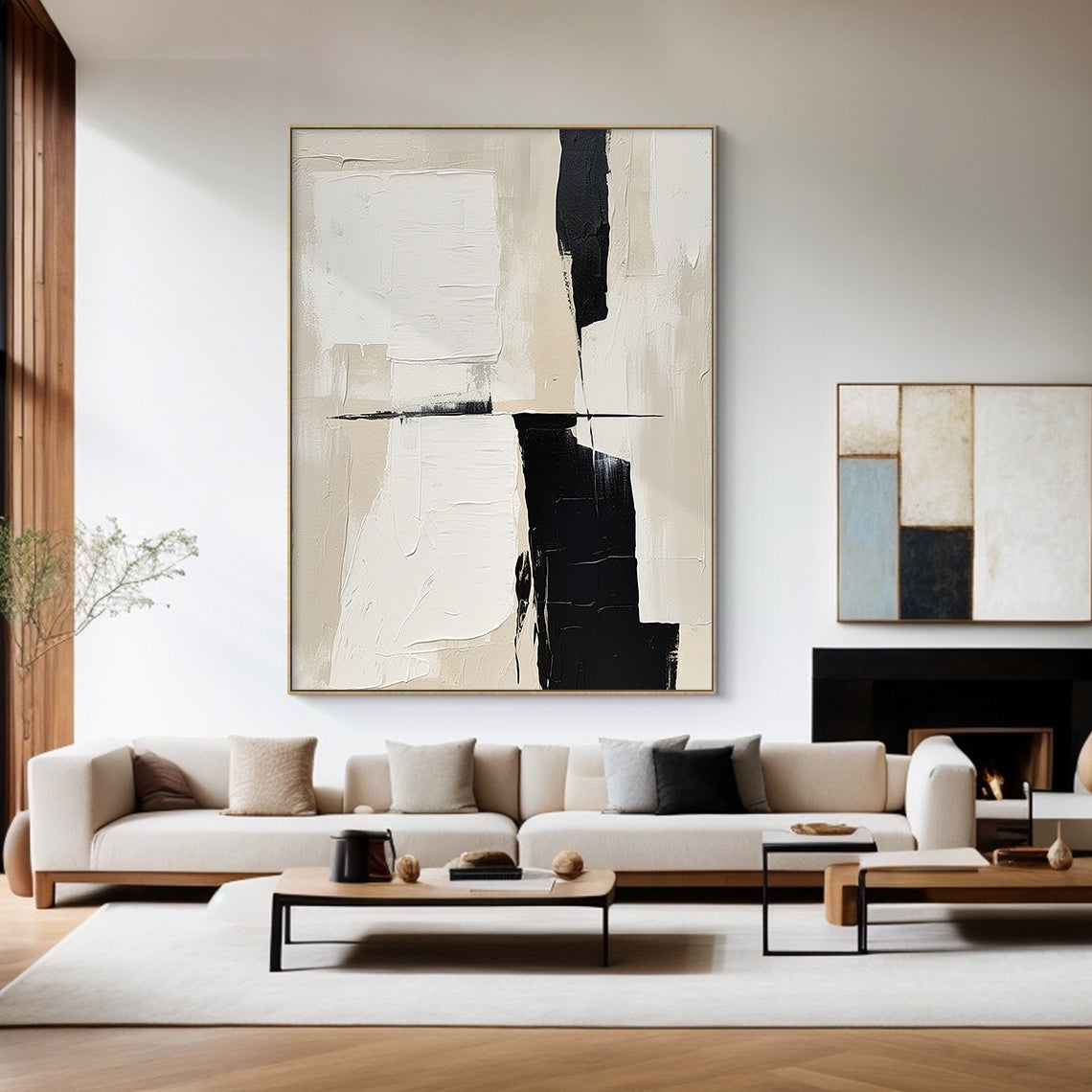
Choosing the right wall art transforms your living room from ordinary to extraordinary. This guide covers sizing, placement, color coordination, and budget-friendly options to help you create a space that reflects your personality.
Quick Answer
The golden rule: choose art that's 2/3 the width of your sofa, hang it 57-60 inches from the floor (eye level), and coordinate colors with your existing palette. For a 9-foot sofa, opt for 6-foot wide art or a gallery wall arrangement.
1. How to Pick the Perfect Wall Art Size for Your Living Room
Size matters when choosing wall art. Follow the 2/3 rule: your artwork should be approximately two-thirds the width of the furniture beneath it.
Quick sizing guide:
- 9-foot sofa → 6-foot wide art
- 7-foot sofa → 4.5-5 feet wide art
- 5-foot loveseat → 3-3.5 feet wide art
For empty walls without furniture, aim for art that covers 60-75% of the wall's width to create intentional impact without overwhelming the space.
Vertical vs. horizontal tips:
- High ceilings (9+ feet): use vertical art to draw eyes upward
- Standard ceilings (8 feet): horizontal pieces create width perception
- Maintain 8-12 inches spacing between art bottom and furniture top
2. Match Wall Art Style to Your Living Room Decor

Your wall art should complement your existing décor style for a cohesive look.
Style matching guide:
Modern rooms → Abstract geometric art, minimalist black-and-white photography, sleek metal frames
Farmhouse style → Distressed wood signs, botanical prints in vintage frames, neutral landscape paintings
Traditional interiors → Classic oil paintings, ornate gold frames, landscape or portrait art
Bohemian spaces → Vibrant tapestries, mixed-media pieces, global-inspired prints, macramé hangings
Pro tip: You can mix styles slightly, but maintain a consistent color palette across all pieces to tie everything together.
3. Coordinate Wall Art Color with Your Living Room Palette

Color coordination prevents clashes and creates visual harmony in your space.
The color linking method: Identify your room's dominant colors (sofa, rug, curtains) and choose art featuring at least one of these hues.
For neutral rooms (beige, gray, white): Add energy with bold accent colors:
- Red abstracts for drama
- Navy blue landscapes for sophistication
- Emerald green botanicals for freshness
For colorful rooms: Use complementary color theory:
- Teal décor → pair with coral or orange art
- Purple accents → complement with yellow artwork
- Orange furniture → harmonize with red or yellow pieces
Avoid clashing: Cool blue rooms with hot pink art, or warm beige spaces with icy silver-blue pieces (unless it's an intentional bold statement).
4. Expert Placement & Arrangement Hacks for Living Room Wall Art
Proper placement turns wall art into a focal point.
The eye-level rule: Hang art centers at 57-60 inches from floor level—this works whether people are seated or standing.
Above-sofa placement:
- Height: 8-10 inches between sofa top and art bottom
- Width: 2/3 of sofa width
- Center art with sofa's center point
Above-fireplace mantel:
- Choose art 2/3 the mantel's width
- Hang 3-6 inches above mantel surface
Gallery wall tips:
- Lay out pieces on floor first
- Photograph arrangement from above
- Maintain 2-3 inches between frames
- Mix sizes but keep visual balance
Awkward spaces: Use tall vertical pieces in corners to draw eyes upward, or stack smaller pieces in narrow wall sections.
5. Choose Wall Art Themes That Reflect Your Personality
Your wall art should tell your story and reflect who you are. Modern living room art falls into four main aesthetic categories:
Wabi-Sabi Art → Perfect for those who appreciate imperfection and natural beauty. Earthy tones, organic textures, and minimalist Japanese aesthetics create serene, meditative spaces. Ideal for calm, grounded personalities.
General Abstract → Bold brushstrokes, vibrant color blocks, and expressive compositions suit creative spirits who want to make a statement. These pieces energize spaces and spark conversation—perfect for dynamic, artistic personalities.
3D Texture Art → Adds dimensional depth and tactile interest to walls. Raised surfaces, layered materials, and sculptural elements create visual intrigue from multiple angles. Ideal for design enthusiasts who value unique, museum-quality pieces.
Minimalist Art → Clean lines, subtle palettes, and negative space appeal to those who embrace "less is more" philosophy. Simple yet sophisticated, these pieces create breathing room in modern living spaces.
Mixing styles: You can combine two complementary styles (e.g., Wabi-Sabi + Minimalist, or Abstract + 3D Texture) in a gallery wall, but maintain consistent color tones to keep visual harmony.
6. Invest in Quality Wall Art That Lasts
Quality wall art is an investment in your home's aesthetic and value.
Why quality matters:
- Premium materials last decades → Canvas and frame quality directly impact longevity
- Professional printing → Vivid colors that won't fade over time
- Large-scale impact → Statement pieces (like 81x61cm/32x24in) create dramatic focal points
- Timeless design → Well-chosen art maintains value and appeal
What to look for in quality art:
- Museum-grade canvas → Archival quality, fade-resistant inks
- Proper sizing → Larger pieces (60cm+ width) provide better visual impact for living rooms
- Professional framing options → Gallery-wrapped edges or premium frames
- Artist reputation → Original designs or limited editions hold value
Price vs. value: While quality wall art typically starts around $279 for substantial pieces (81x61cm), consider the cost per year:
- $279 piece lasting 10+ years = $28/year for daily visual enjoyment
- Cheap prints often need replacement within 1-2 years
Pro tip: One high-quality statement piece above your sofa makes more impact than multiple low-quality prints scattered around the room.
7. Common Mistakes to Avoid When Choosing Living Room Wall Art
Avoid these pitfalls to save time and money.
Mistake #1: Choosing art that's too small → Solution: Always measure first, use the 2/3 rule for furniture walls
Mistake #2: Hanging art too high → Solution: Stick to 57-60 inch center height from floor
Mistake #3: Ignoring lighting → Solution: Add picture lights for dark corners, avoid direct sunlight (causes fading)
Mistake #4: Clashing multiple styles → Solution: When mixing styles, maintain consistent color palette across pieces
Mistake #5: Overcrowding walls → Solution: Embrace negative space, limit to 3-5 pieces per large wall
Mistake #6: Forgetting room function → Solution: Formal spaces need sophisticated art; family rooms suit personal, conversational pieces
Quick Checklist: Before You Buy
✓ Measured wall space and furniture dimensions
✓ Identified room's dominant color palette
✓ Determined décor style (modern, farmhouse, traditional, etc.)
✓ Considered lighting conditions
✓ Planned hanging height (57-60 inches center)
✓ Selected theme reflecting your personality
✓ Set realistic budget
FAQs
How much should I invest in quality living room wall art?
Quality statement pieces typically range from $279-$2,698 depending on size and framing. Larger pieces (90x60" / 229x152cm) above sofas create maximum impact, while medium sizes (32x24" / 81x61cm) work well for secondary walls or gallery arrangements. Consider this an investment—museum-quality art maintains value and visual impact for decades.
What size wall art should I choose for my living room?
We offer three orientations to fit any space: Vertical (ideal for narrow walls or tall ceilings), Horizontal (perfect above sofas for width), and Square (versatile for balanced compositions). Measure your wall and furniture first, then apply the 2/3 rule—art should be two-thirds your sofa's width.
Which frame option is best for my living room décor?
Frame choice dramatically affects final look:
- Black/White frames → Modern, minimalist spaces
- Gold frames → Traditional, luxurious interiors
- Silver frames → Contemporary, cool-toned rooms
- Wood frames → Warm, organic, Wabi-Sabi aesthetics
- Frameless → Clean, gallery-style presentation
- Rolled → For professional custom framing
Can I mix different art styles in my living room?
Yes—pairing complementary styles creates visual interest. Try Wabi-Sabi + Minimalist for serene spaces, or Abstract + 3D Texture for dynamic energy. Keep a consistent color palette across pieces to maintain cohesion.
What's better: one large statement piece or gallery wall?
Large pieces (60"+ width) create dramatic focal points and work beautifully in minimalist or modern spaces—one powerful artwork above your sofa makes an immediate impact. Gallery walls suit those wanting to mix multiple styles or sizes, but require careful planning to maintain balance.
Conclusion
Selecting the perfect wall art for your living room combines professional design principles with personal aesthetic vision. Start with the 2/3 sizing rule to ensure proper scale, coordinate colors with your existing palette, and position pieces at eye level (57-60 inches from floor) for optimal viewing.
Quality wall art is an investment in your home's atmosphere and value. Whether you choose a bold Abstract piece, serene Wabi-Sabi artwork, dimensional 3D Texture, or clean Minimalist design, the right statement piece transforms your living room into a curated space that reflects your unique personality.
Ready to elevate your space? Browse our curated collection of museum-quality wall art available in multiple sizes (32x24" to 90x60"), orientations (vertical, horizontal, square), and premium frame options (black, white, gold, silver, wood, frameless) to find the perfect piece for your living room.
Share:
The Art of Scale: How to Choose the Right Wall Art Size for Any Space