


The Illusion of a "Fast" Wall Upgrade

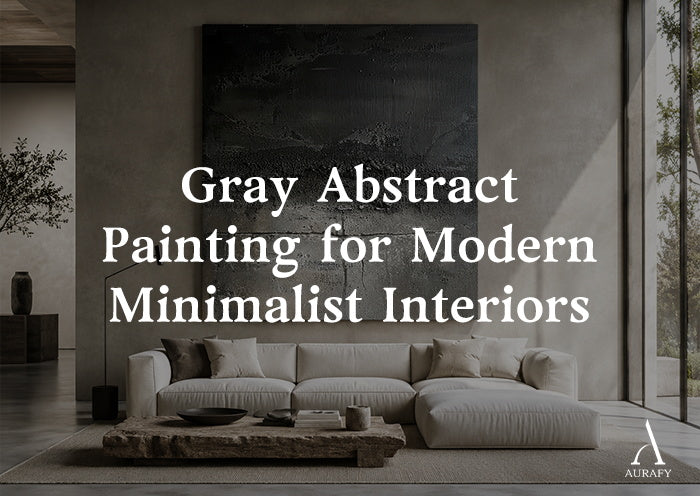
A genuine gray abstract painting can seamlessly anchor modern minimalist interiors, adding crucial architectural depth to pristine spaces without introducing visual clutter. Many homeowners moving into newly designed minimalist spaces face the same design dilemma: the walls feature premium white latex or raw micro-cement, yet the vast expanse feels cold and unfinished.
To solve this, a quick search for budget wall art turns up dozens of peel-and-stick vinyl options. Vendors market them as "no drilling required" or "instant 3D texture," staging them beautifully under studio lighting.
However, the problem with these temporary alternatives shows up after the sale, not before it. While these synthetic products photograph well, they behave very poorly once they hang on a real wall under everyday lighting conditions. To maintain the strict material integrity of a high-end interior, integrating curated gray abstract paintings built from real minerals is an architectural necessity, not just a decorative choice.
Why Plastic Wall Decals Never Work in Minimalist Spaces

Simply put, flat PVC sheets produce a cheap synthetic glare and degrade rapidly, undermining the clean, authentic essence of minimalist design.
Minimalism relies heavily on how natural light interacts with authentic surfaces. When a flat printed vinyl decal is introduced into this mix, it fails at a fundamental physical level under real-world lighting conditions in three specific ways:
· Glare and Adhesive Haze: A flat PVC surface reflects light in a sharp, cheap-looking flash. Over time, the adhesive layer behind the decal degrades under ambient heat, and light passing through it scatters unevenly. The surface takes on a cloudy, oily look, similar to old plastic sheeting left in the sun.
· Edge Curling and Bubbling: Walls expand and contract slightly with seasonal temperature and humidity shifts. Vinyl and wall paint do not expand at the same rate. Within 12 to 18 months, this mismatch shows up as curling edges and small air bubbles trapped under the surface, making the wall look damaged.
· Shadows That Never Move: Printed decals fake depth by printing a highlight on one side of a shape and a shadow on the other. Walk closer, or shift your angle by more than 15 degrees, and the illusion breaks. Real shadows shift with your point of view; printed ones remain static, causing human vision to instantly flag the piece as an artificial imitation.
What Real Material Looks Like Instead
The key idea is that a handmade mineral gray abstract painting solves these issues structurally, using physical dimension and light absorption to blend into the architecture.
A genuine black and gray abstract painting built from structural mineral paste operates on a completely different physical plane. The paste itself is formulated from marble powder, slaked lime, and pH-balanced mineral pigments. This blend possesses a natural microporosity, meaning it absorbs and diffuses light instead of bouncing it back sharply, completely eliminating plastic glare.
Furthermore, the texture is physically real. A premium black, white, and gray abstract painting carries mineral ridges 15 to 20 millimeters deep, shaped by an artist's palette knife. Every tonal shift across the grayscale comes from an actual shadow cast by that raised surface, not from a printed gradient. As you walk past the piece, the shadows genuinely shift because the depth is real, creating a dynamic element that pairs beautifully with modern micro-cement or polished concrete walls.
Material Comparison: Mineral Paintings vs. Vinyl Decals

In practice, placing mass-produced plastics next to high-end architectural surfaces cheapens the entire room, whereas mineral-based art elevates it.
Quality DimensionTemporary Vinyl Wall DecalsGenuine Mineral Gray PaintingArchitectural ImpactClose-Range TextureFlat surface with printed dots; sharp, machine-cut stencil edges.
Fine sandy grain with organic, irregular ridges left by the palette knife.
Decals read as stickers close up; mineral paste reads as an extension of the wall.
Long-Term DurabilityYellows, turns brittle, and curls within 1–2 years; harms underlying drywall paint upon removal.
Chemically stable, moisture-resistant, and develops an appealing patina over decades.
Paintings act as permanent assets; decals function as high-maintenance temporary patches.
Surface IntegrationVisual clashing when placed next to real wood, concrete, or stone slab.
Shares the same raw material family as concrete, plaster, and fine stone.
Decals cheapen premium materials; mineral textures elevate surrounding finishes.
One Real Piece Beats a Wall Full of Fakes

Overall, a single honest piece of large-format textured artwork anchors a minimalist room far more effectively than covering walls with synthetic imitations.
Some buyers try to cover an entire minimalist living room or bedroom wall in printed decal tiles to fake a bold, high-impact look for less money. This approach invariably backfires. More printed surface simply means more visible seams, more curling edges, and more points where the optical illusion breaks down over time, ruining the clean lines required by minimalist aesthetics.
A sophisticated approach dictates the opposite: leave the vast majority of the wall perfectly bare, allowing the architecture to breathe, and invest that budget into one large, genuine textured piece. A single authentic gray abstract painting acts as a powerful visual anchor, commanding the entire accent wall while maintaining the quiet, elevated soul of a modern minimalist home.
Frequently Asked Questions (FAQ)
Are vinyl wall decals worth buying for modern living rooms?
No, if you value long-term interior quality. While inexpensive upfront, vinyl decals create a cheap synthetic glare and begin to bubble or curl within 12 to 18 months, which disrupts the polished aesthetic of modern living spaces.
Do temporary wall decals damage drywall paint?
Yes. The chemical adhesives used in most peel-and-stick vinyl decals degrade over time. When removed, they often bond too tightly to the wall surface, tearing away the underlying latex paint layer and requiring costly wall patching.
Is a textured gray abstract painting better than a flat canvas print for minimalist decor?
Absolutely. Minimalist interiors feature large, smooth surfaces like concrete or micro-cement. A flat print or canvas looks detached and dimensional-less against them. A textured mineral painting uses actual 3D ridges to catch changing daylight, breathing life into a monochrome space.
How long do mineral-based abstract paintings last?
When sealed with a professional matte protective topcoat, mineral paintings remain chemically stable for decades. Unlike vinyl, they do not yellow or warp with temperature shifts, making them a permanent asset for your home.
Calibrate Your Minimalist Space
If you are deciding between temporary wall decals and long-lasting textured artwork, share a photo of your wall or your interior design blueprint with us. Contact AurafyArt with your specific wall dimensions and material notes, and we will recommend a custom gray abstract painting designed to flawlessly command your modern minimalist interior.
Share:
Green Abstract Painting for Eclectic Plant-Filled Rooms
How to Curate a Whole-House Abstract Art Collection